
22 January 2025 · Aditi sharma
Why Does Your Credit Score Matters When Applying for a Loan?
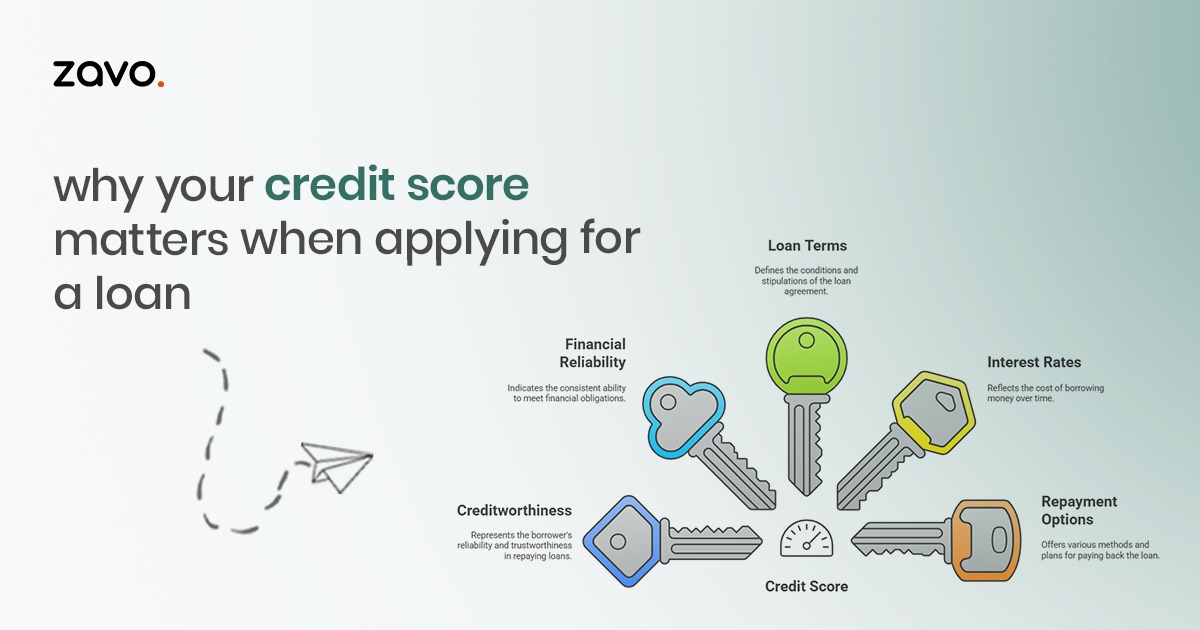
Table of contents9 sections
- What Is a Credit Score and Why Does It Matter?
- How to Boost Your Credit Score
- The Significance of Scores in the Loan Process
- Section 4
- How Loan Agents Use Credit Scores
- What Is the Minimum Score Required for Different Types of Loans?
- The Long-Term Importance of Good Credit
- Conclusion
- Frequently Asked Questions
Have you ever wondered what it takes to turn your financial dreams into reality?
Whether it’s stepping into your dream home, cruising in that car you’ve always admired, or getting approved for a much-needed loan, the answer lies in one powerful number—your credit score. Often overlooked, this little number holds the key to big opportunities.
Your credit score isn’t just a financial metric; it’s a reflection of your financial habits and discipline. A strong score can unlock doors to lower interest rates, higher loan amounts, and better repayment terms. On the flip side, a poor score can keep those opportunities out of reach, making financial progress feel like an uphill battle.
In a significant move to enhance financial transparency, the Reserve Bank of India (RBI) has introduced a new 15-day credit reporting rule. This mandates lenders to update credit information every fortnight, ensuring your CIBIL score is always accurate and up to date. As Business Standard highlights, this step aims to provide borrowers with greater clarity and lenders with better tools for risk assessment.
But what does this mean for you? In this blog, we’ll break down the importance of your credit score, how it impacts your loan approvals, and, most importantly, share actionable strategies to boost it. Whether you’re just starting your financial journey or looking to rebuild your score, you’re in the right place.
What Is a Credit Score and Why Does It Matter?
A cibil score is a numerical representation of your creditworthiness, ranging from 300 to 900. Lenders use it to gauge the risk of lending money to you. According to Bajaj Finserv, a score of 750 or higher significantly improves your chances of securing loans with favorable terms.
A good cibil score influences:
- Loan Approval: Many lenders have minimum credit score requirements for eligibility.
- Interest Rates: Higher scores typically result in lower interest rates, saving borrowers thousands over time.
- Loan Amounts: Strong scores may qualify you for higher loan limits.
- Repayment Terms: Good credit often translates to more flexible repayment options.
How to Boost Your Credit Score
Improving your score requires diligence, patience, and consistent effort. Here’s how:
1. Check Your Credit Report Regularly
Regularly reviewing your credit report is the first step in understanding your score. Obtain reports from Equifax, Experian, and TransUnion, and carefully check for inaccuracies. According to a Consumer Reports study, one-third of Americans have found errors on their reports. Disputing and correcting these errors can give your score an immediate boost.
2. Pay Bills on Time
Your payment history accounts for 35% of your score. Missing even a single payment can cause a significant drop. Automate your payments or set reminders to avoid late fees. A study from the Urban Institute shows that consistently paying bills on time is one of the most effective ways to maintain a strong score.
3. Minimize Credit Card Balances
High credit utilization can negatively impact your score. Keep your credit utilization ratio below 30%. For instance, if your credit limit is ₹50,000, aim to use less than ₹15,000. Paying down credit card debt not only improves this ratio but also reduces interest payments over time.
4. Avoid Opening Too Many New Accounts
Every time you apply for credit, a hard inquiry is made, which can temporarily lower your score. Opening multiple accounts within a short time frame signals financial risk to lenders. Apply for new credit only when absolutely necessary.
5. Keep Old Accounts Open
The length of your credit history influences your score. Even if you no longer use an old account, keeping it open can positively contribute to your credit history. This strategy can be especially useful for maintaining a stable credit profile over time.
6. Diversify Your Credit Mix
Lenders favor a mix of credit types, such as credit cards, auto loans, and mortgages. However, only take on additional credit if you can manage it responsibly. A diverse credit mix demonstrates your ability to handle various forms of debt.
7. Be Patient and Persistent
Scores improve gradually, so consistency is key. Use tools like zavo to track your progress and stay on top of your financial health. Celebrate small milestones as you work toward larger goals.
The Significance of Scores in the Loan Process
Scores are crucial for determining your loan eligibility and the terms you’re offered. Here’s why:
High Scores Signal Low Risk
Borrowers with scores above 750 are considered low-risk. This makes lenders more likely to offer lower interest rates and higher loan amounts.
Influence on Loan Types
Good scores can qualify borrowers for prime loans with competitive terms, while lower scores may limit options to subprime loans with higher interest rates and stricter terms.
Better Negotiation Power
With a strong score, you can negotiate better terms. Lenders are more willing to offer lower interest rates or extend repayment periods to borrowers with excellent credit.
How Loan Agents Use Credit Scores
Loan agents act as intermediaries between borrowers and lenders. They use scores to:
- Assess financial responsibility and determine loan eligibility.
- Match borrowers with lenders offering the most suitable terms based on their credit profile.
- Advise borrowers on improving their scores for better loan opportunities.
What Is the Minimum Score Required for Different Types of Loans?
Your score plays a crucial role in determining your eligibility for loans and the interest rates you’ll be offered. Different types of loans have varying minimum credit score requirements.
Minimum Score Requirements:
- Credit Cards: While some credit cards may be available to individuals with lower scores, a good score (typically above 700) can help you secure better terms, such as higher credit limits and lower interest rates.
- Personal Loans: Personal loans generally require a score in the range of 650 to 700 or higher. A higher score can increase your chances of approval and secure more favorable terms.
- Auto Loans: The minimum score required for an auto loan can vary depending on the lender and the type of vehicle. However, a score above 650 is generally preferred.
- Mortgage Loans: Mortgage lenders typically have higher score requirements, often ranging from 700 to 750 or higher. A strong score can help you qualify for better mortgage terms and lower interest rates.
- Student Loans: While federal student loans may not have strict score requirements, private student loans often require a score above 650.
- Business Loans: Business loans typically have higher score requirements, often in the range of 680 to 700 or higher.
The Long-Term Importance of Good Credit
Good scores extend beyond loans and financial products. Here’s how they can impact other aspects of life:
- Employment Opportunities: Some employers check scores during the hiring process.
- Rental Applications: Landlords may consider your score when evaluating rental applications.
- Insurance Premiums: Many insurers use scores to calculate premiums. A higher score can lead to lower rates
Conclusion
Your credit score isn’t just a number; it’s the gateway to better financial opportunities. Whether you’re applying for a loan, securing lower interest rates, or simply building a strong financial foundation, maintaining a good score is essential.
Improving your score takes time, but with the right strategies and consistent effort, you can turn your credit profile into a powerful financial asset. From checking your credit report for inaccuracies to managing credit utilization, every step you take contributes to a healthier score and brighter financial future.
With zavo, you can check your credit score for free and track your progress.
Frequently Asked Questions
1. How often should I check my credit score?
Checking your score regularly is essential to stay on top of your financial health. Ideally, you should review your score at least once every quarter. This helps you track your progress and detect any errors or inaccuracies in your credit report. Monitoring your score frequently also ensures you can address potential issues, such as fraudulent activity, before they escalate.
2. Can paying off debt immediately boost my score?
Yes, paying off debt—especially high-interest credit card balances—can have an immediate positive impact on your score. When you reduce your credit utilization ratio (the percentage of your available credit in use), your score improves. For example, if your credit limit is ₹1,00,000 and you’ve used ₹50,000, paying down the balance to ₹20,000 significantly enhances your credit profile.
3. Does applying for a new credit card lower my score?
Applying for a new credit card can temporarily lower your score. Each application triggers a hard inquiry, which stays on your report for up to two years. While the impact is usually small and short-term, multiple applications in a short period can signal financial instability to lenders.