
18 August 2026 · Mayank Dabral
Settled vs Closed vs Written Off: CIBIL Guide
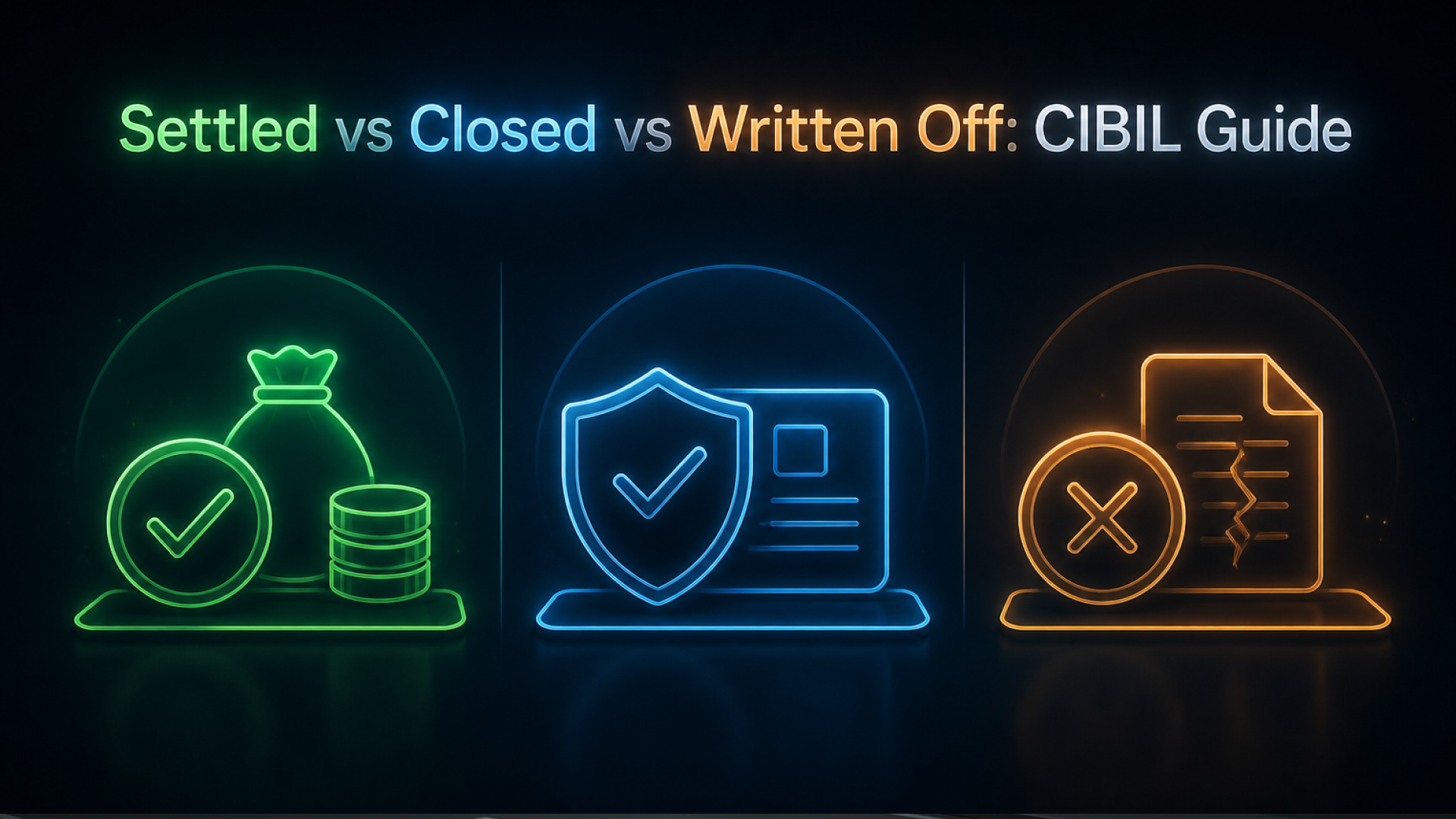
Table of contents8 sections
- What Do These Three Statuses Actually Mean?
- Settled vs Closed vs Written Off: The Key Differences
- Why "Settled" Exists as a Middle Ground
- Why Written Off Is the Outcome Worth Avoiding
- Which Status Is Most Common and Why It Matters
- How Zavo Helps You Avoid a Written-Off Status
- A Quick Real-World Scenario
- Frequently Asked Questions
Pull up your CIBIL report after resolving a loan and you'll see one of three words next to it and mixing them up can cost you your next loan approval. Settled vs closed vs written off isn't just terminology; each status tells a lender a completely different story about what happened to your debt, and each one affects your future eligibility differently. If you're currently behind on payments and weighing your options, understanding this distinction is the single most useful thing you can do before deciding what to do next.
What Do These Three Statuses Actually Mean?

Closed - the loan or card was repaid in full, exactly as originally agreed, with no reduction and no negotiation. This is the cleanest possible outcome and the one every lender wants to see on your report, because it shows you honoured the original terms end to end.
Settled - the lender agreed to accept a reduced lump-sum amount to close the account because you genuinely couldn't repay the full outstanding balance. The remaining amount is waived, the account stops accruing further interest or penalties, but the report reflects it as "Settled," not "Closed" a distinction future lenders notice immediately.
Written Off - the lender has given up trying to recover the amount, usually after months of missed payments and no resolution from the borrower's side. Unlike a settlement, nothing was negotiated or paid the lender simply moved the account off their active books as a loss, and the account can still legally be pursued for recovery even after being written off internally.
Settled vs Closed vs Written Off: The Key Differences
Line these three statuses up side by side and the gap between Settled, Closed, and Written Off becomes obvious:
- Who initiates it: Closed and Settled both involve borrower action full repayment or a negotiated payment. Written Off is lender-driven, after the borrower has stopped engaging entirely.
- What future lenders see: Closed signals reliability. Settled signals partial repayment on negotiated terms. Written Off signals the previous lender recovered nothing at all and simply exited the account.
- Impact on new credit: Closed rarely affects new approvals. Settled can lower your score and make lenders cautious for a period. Written Off is the strongest red flag of the three and can block approvals outright.
- How long it stays visible: Settled and Written Off statuses both typically remain on your CIBIL report for around seven years, even though the underlying story behind each is very different.
- Can it be reversed: Settled can sometimes be upgraded to Closed by repaying the waived amount later. Written Off is far harder to correct after the fact, since no formal agreement exists behind it.
Why "Settled" Exists as a Middle Ground

Settlement exists because the alternative letting an account slide toward Written Off is worse for everyone. Banks would rather recover a negotiated portion than nothing at all, and borrowers get a documented, legal way to close a debt they genuinely cannot repay in full. That's the premise behind the loan settlement process: a structured negotiation that produces a paper trail a settlement letter and a No Dues Certificate that a write-off never gives you.
Why Written Off Is the Outcome Worth Avoiding
A written-off account isn't just a worse label it changes how future lenders read your entire history. It suggests no negotiation and no partial payment took place, which reads as riskier than a settlement where you clearly tried to close the debt on fair terms. Borrowers who drift toward write-off usually didn't choose that outcome on purpose; it happened because the account sat unaddressed for months while nobody stepped in to negotiate a settlement before it was too late. By the time an account is formally written off, the borrower has often lost the ability to negotiate terms at all the lender has already decided the relationship is over.
Which Status Is Most Common and Why It Matters
Most borrowers who fall behind assume there are only two outcomes: pay in full, or default and hope it blows over. In practice, the settled vs closed vs written off decision is usually made by inaction rather than by choice accounts drift toward write-off simply because nobody initiated a settlement conversation in time. Lenders are generally far more willing to negotiate a settled outcome in the early months of default than they are once an account has been internally flagged for write-off, which is why timing matters as much as the amount you can afford to pay.
Can a Settled Account Become a Closed One?
Sometimes, yes if your finances improve later and you repay the waived portion, certain lenders will update the status from Settled to Closed. We cover the exact steps for that in our guide on improving your CIBIL score after loan settlement.
If You Can't Repay in Full, Which Status Should You Aim For?
Settled, every time. It isn't the ideal outcome Closed always is but between the two realistic paths for someone who cannot pay in full, a negotiated settlement is dramatically better than doing nothing and watching the account get written off. Settlement stops recovery calls, gives you documented closure, and leaves the door open to eventually upgrade to Closed. A write-off does none of that.
How Zavo Helps You Avoid a Written-Off Status
Zavo's loan settlement service exists specifically to intervene before an account reaches write-off. Instead of letting missed EMIs pile up until the lender gives up on recovery, Zavo negotiates directly with the bank or NBFC, works out a lump-sum settlement you can realistically afford, and ensures you walk away with the documentation settlement letter and No Dues Certificate that protects you going forward. The process runs under RBI guidelines, addresses recovery harassment directly as part of the negotiation, and carries no upfront fees, so you know exactly what you're signing up for before anything is agreed.
If you're currently missing payments and unsure whether you're heading toward settlement or write-off territory, that's a decision worth making deliberately rather than by default. Every month an account sits unresolved narrows your options lenders that were open to a settlement discussion early on become less flexible once an account is flagged for write-off internally. Start a review with Zavo's settlement team here: Zavo Settle.
A Quick Real-World Scenario
A borrower with a ₹4 lakh personal loan stopped paying after a job loss and let three EMIs lapse while collection calls escalated heading toward a write-off within another two to three missed cycles. Instead, a settlement was negotiated for ₹2.1 lakh, closing the account as "Settled" rather than "Written Off," a status the borrower upgraded to "Closed" six months later after clearing the remaining waived balance.
Frequently Asked Questions
Q1. What is the difference between settled and closed in CIBIL?
Closed means the loan was repaid in full as agreed. Settled means the lender accepted a reduced lump sum to close the account, which is recorded separately and viewed less favourably by future lenders.
Q2. Is written off worse than settled in CIBIL?
Yes. A write-off means the lender recovered nothing and simply gave up, which is viewed far more negatively than a settlement, where at least a negotiated payment was made.
Q3. Can a settled loan be changed to closed in CIBIL?
In many cases yes if you later repay the waived portion, some lenders will update the status from Settled to Closed, improving how the account reads to future lenders.
Q4. How long do settled and written-off statuses stay on a CIBIL report?
Both typically remain visible on a CIBIL report for around seven years from the date they're recorded.
Q5. Should I choose a settlement or let a loan get written off?
Settlement is almost always the better choice it shows you negotiated and paid something, while a write-off shows the lender recovered nothing, which is a much stronger red flag.
The gap between settled, closed, and written off comes down to one thing: whether you acted before the lender had to. If your EMIs have already slipped and you'd rather close the account on negotiated terms than risk a write-off, start with a settlement review at Zavo.