
1 February 2025 · Aditi sharma
The Pros and Cons of Credit Card Loans vs Bank Loans
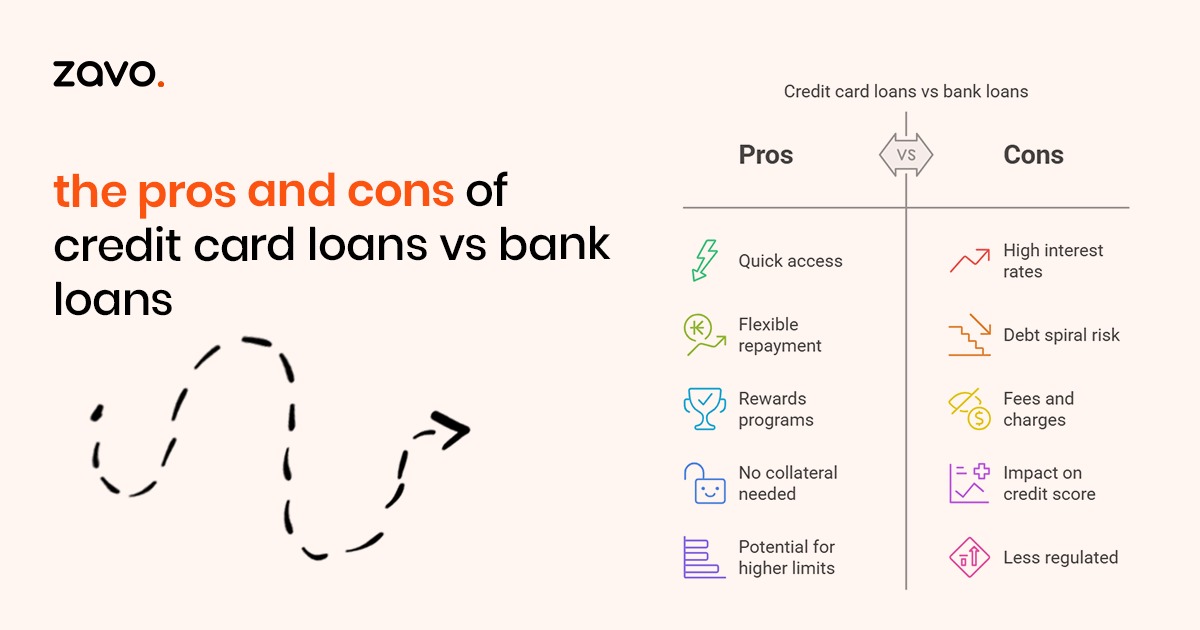
Table of contents4 sections
When facing an unexpected financial requirement, many people struggle to choose between a credit card loan and a personal loan. Both of these loan options come with their own benefits and limitations, and the right choice depends on your financial needs, repayment capability, and urgency.
A credit card loan is a pre-approved loan extended to select credit cardholders based on their credit history and usage pattern, making it a quick and convenient borrowing option. On the other hand, a personal loan is an unsecured loan provided by banks and financial institutions to both customers and non-customers, generally at a lower interest rate, with the flexibility of borrowing larger amounts.
However, choosing the wrong loan option can lead to higher interest costs, financial stress, and potential debt traps. Hence, it is essential to understand the differences between the two and analyze which one aligns with your financial requirements.
This detailed blog will help you make the right choice by explaining:
✅ The key differences between credit card loans and personal loans.
✅ The features, benefits, and drawbacks of both loan types.
✅ The impact of each loan on your credit score and financial stability.
✅ When you should opt for a credit card loan and when a personal loan is the better option.
✅ Answers to the most commonly asked questions regarding these loan types.
What is a Credit Card Loan?
A credit card loan is a type of loan that is extended to pre-approved credit cardholders based on their spending pattern, repayment behavior, and available credit limit. Unlike withdrawing cash using a credit card, which comes with extremely high interest rates, a credit card loan allows you to borrow against your existing credit limit at relatively lower rates, which are then repaid in EMIs.
Key Features of a Credit Card Loan:
- Instant Availability Without Documentation: Since it is a pre-approved loan, you do not need to go through a lengthy application process or submit any additional documents. The bank offers the loan based on your existing relationship with them.
- Quick Disbursal: One of the biggest advantages of a credit card loan is its fast processing time. The loan amount is usually credited to your bank account within 24 hours, making it an ideal option for urgent financial needs such as medical emergencies or last-minute expenses.
- Loan Amount is Based on Credit Limit: The amount you can borrow is determined by your available credit limit. If your card has a high limit and you have unused credit, you may be eligible for a higher loan amount. However, this also means that if you have already used a significant portion of your credit limit, your loan eligibility will be lower.
- Higher Interest Rates: Compared to personal loans, credit card loans generally have higher interest rates. The rate of interest varies between banks and is influenced by your credit history, repayment behaviour, and the specific terms of your credit card issuer.
- Repayment is Added to Your Credit Card Bill: The loan EMIs are added to your monthly credit card bill, which means you must ensure timely payments to avoid late fees and a negative impact on your credit score.
When Should You Opt for a Credit Card Loan?
A credit card loan is a good option when:
- You need an instant loan with minimal processing time: If you require immediate access to funds and do not want to go through a long approval process, a credit card loan is a quick solution.
- You have a relatively small financial requirement: Since credit card loans are capped at your credit limit, they are best suited for short-term needs such as emergency expenses, small medical bills, or travel expenses.
- You are not eligible for a personal loan: If you do not qualify for a personal loan due to income restrictions, lack of sufficient credit history, or employment status, a credit card loan can be an alternative option to meet your financial needs.
- You are getting a competitive interest rate: In some cases, banks offer special promotional interest rates on credit card loans, making them a more attractive option than personal loans. If you receive such an offer, compare the rates and repayment terms before making a decision.
What is a Personal Loan?
A personal loan is an unsecured loan provided by banks and financial institutions that does not require any collateral. The eligibility for a personal loan is determined based on factors such as income level, employment history, repayment capacity, and credit score. It is one of the most versatile loan options, as it can be used for multiple purposes, including medical emergencies, home renovation, wedding expenses, education, and even debt consolidation
Retail borrowers are expected to exercise greater caution in leveraging loans in the coming year. A significant change in lending regulations now requires lenders to update credit bureau records every 15 days, rather than once a month. This enhancement allows financial institutions to assess borrower risk more accurately, reducing the chances of individuals taking multiple loans simultaneously. With more precise and up-to-date data, lenders can make informed decisions, leading to a more robust and sustainable lending ecosystem..
Key Features of a Personal Loan:
- Higher Loan Amount: Unlike a credit card loan, which is limited by your available credit, a personal loan is approved based on your income and financial stability, allowing you to borrow a higher amount for significant expenses.
- Lower Interest Rates: Personal loans typically have lower interest rates than credit card loans. The rates start from 10.50% per annum and vary based on the borrower’s creditworthiness and relationship with the lender.
- Fixed Repayment Structure: A personal loan comes with a structured repayment plan, where you pay a fixed EMI over a predetermined tenure (usually 1 to 5 years). This helps in better financial planning and budgeting.
- Longer Processing Time: Unlike credit card loans, which are disbursed almost instantly, personal loans take 3 to 5 business days for approval and disbursement since banks need to verify your documents and assess your eligibility.
- Requires Documentation: Unlike credit card loans, personal loans require you to submit documents such as identity proof, address proof, income proof, and employment verification for approval.
When Should You Opt for a Personal Loan?
A personal loan is a better choice when:
- You need a large sum of money: If your financial requirement is beyond your credit card limit, a personal loan allows you to borrow a higher amount, making it suitable for major expenses such as home renovations, medical treatments, weddings, or business investments.
- You want lower interest rates and structured repayment: Personal loans offer lower interest rates compared to credit card loans, and they come with fixed EMIs, helping you manage repayments efficiently.
- You can wait a few days for loan approval: If you do not need instant access to funds, a personal loan may be the more cost-effective option in the long run due to its lower interest rates and flexible repayment options.
Conclusion
With the rising concern over bad loans in personal loans and credit cards, it has become more critical than ever for borrowers to make well-informed financial decisions. While banks have successfully reduced their overall gross NPAs from ₹6.97 lakh crore (5.89% of advances) in March 2022 to ₹4.56 lakh crore (2.79%) by March 2024, responsible borrowing remains key to maintaining financial stability.
When deciding between a credit card loan and a personal loan, carefully evaluate your financial needs, repayment capability, and loan terms. A credit card loan is ideal for small, urgent financial needs with quick disbursal and minimal documentation, whereas a personal loan is more suitable for larger expenses, lower interest rates, and structured repayment plans.
Regardless of the option you choose, ensure that you borrow within your means, make timely repayments, and avoid over-leveraging to maintain a healthy credit score and long-term financial well-being. If you need further guidance or a loan comparison, don’t hesitate to seek expert assistance.
FAQs
1. Should I take out a personal loan to pay off my credit cards?
Yes, if your credit card interest rate is too high, you can take a personal loan at a lower interest rate and consolidate your debt.
2. Do personal loans hurt credit scores?
No, as long as you make timely payments, a personal loan will not negatively impact your credit score. In fact, repaying on time can boost your creditworthiness.
3. Should I pay off my credit card or personal loan first?
Since credit cards generally have higher interest rates, it’s advisable to pay off credit card debt first, then focus on personal loan repayment.
4. Can I request a credit card loan if I don’t have a pre-approved offer?
Yes, you can request a loan against your credit card. However, approval is subject to the bank’s discretion.
5. Is it better to take a loan on a credit card or apply for a fresh personal loan?
It depends on your situation:
- If you need a small amount quickly, opt for a credit card loan.
- If you need a large sum with a lower interest rate, choose a personal loan.