
18 January 2025 · Aditi sharma
How to Improve Your Chances of Loan Approval
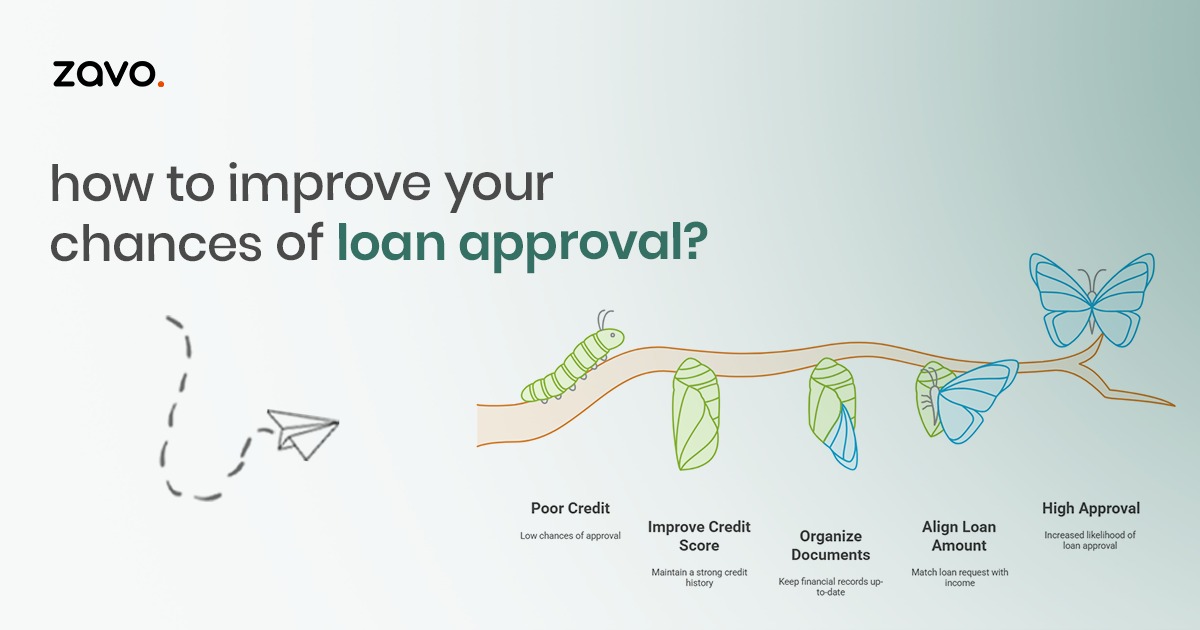
Table of contents11 sections
- 1. Understand Your Credit Score and History
- 2. Choose the Right Type of Loan
- 3. Maintain Stable Employment and Income
- 4. Lower Your Debt-to-Income Ratio
- 6. Keep Your Documentation in Order
- 7. Apply with a Co-Applicant or Guarantor
- 8. Provide Accurate and Complete Information
- 9. Research Lenders and Compare Offers
- 10. Be Patient and Strategic
- Conclusion
- Frequently Asked Questions
Are you struggling to get your loan approved and wondering what factors lenders consider? In today’s fast-paced world, loans have become a vital part of achieving personal and financial goals, whether it’s buying a dream home, pursuing higher education, or starting a business. However, the process of getting a loan approved can be daunting, especially if you’re unaware of the steps to take. If you’re looking to improve your chances of loan approval, this guide is your go-to resource. Let’s dive into practical, actionable tips and strategies to help you secure that much-needed loan with confidence.
1. Understand Your Credit Score and History
Your credit score is one of the most critical factors that lenders evaluate. A good credit score (typically above 750) signals financial responsibility and increases your chances of approval. Start by checking your credit report for errors and discrepancies that might harm your score. Pay off outstanding dues, reduce your credit utilization, and avoid applying for multiple loans or credit cards simultaneously, as it can lower your score.
2. Choose the Right Type of Loan
Selecting the right loan for your needs is crucial. Different loans have different eligibility criteria, interest rates, and tenures. For instance, if you’re looking for a home loan, ensure you’re aware of property-related requirements. If it’s a personal loan, consider your repayment capacity. Research various lenders to find a loan that aligns with your financial situation.
3. Maintain Stable Employment and Income
Lenders prefer borrowers with a stable income and consistent employment history. If you’ve recently changed jobs, it’s advisable to wait a few months before applying for a loan. Ensure that your monthly income is sufficient to cover the loan’s Equated Monthly Installments (EMIs) along with other expenses. Providing proof of additional income sources, like freelance work or investments, can further strengthen your application.
4. Lower Your Debt-to-Income Ratio
The debt-to-income (DTI) ratio is another key factor that lenders consider. It’s the percentage of your monthly income that goes towards debt repayments. Aim to keep your DTI ratio below 40% to demonstrate that you can manage additional debt comfortably. Pay off existing loans and avoid taking on new ones before applying.
5. Save for a Higher Down Payment
For secured loans like home or car loans, offering a higher down payment reduces the lender’s risk and improves your chances of approval. A larger down payment also means a smaller loan amount, which can lower your EMIs and interest rates. It shows the lender that you are financially prepared and committed.
6. Keep Your Documentation in Order
Incomplete or incorrect documentation is one of the most common reasons for loan rejection. Ensure that you have all required documents, including identity proof, address proof, income statements, and bank statements. Double-check the lender’s checklist to avoid missing any critical paperwork.
7. Apply with a Co-Applicant or Guarantor
If your credit score or income isn’t sufficient, applying with a co-applicant or guarantor can improve your chances. A co-applicant’s income and credit history are considered alongside yours, increasing the lender’s confidence in your ability to repay.
8. Provide Accurate and Complete Information
Honesty is essential when filling out a loan application. Provide accurate details about your income, expenses, employment, and financial obligations. Any discrepancies can lead to rejection or legal complications. Be transparent and ready to explain any irregularities in your financial history.
9. Research Lenders and Compare Offers
Not all lenders have the same criteria for loan approval. Research multiple lenders to find the ones most likely to approve your application based on your profile. Use online tools to compare interest rates, loan tenures, processing fees, and other terms. Pre-approved loan offers can also be an excellent option if available.
10. Be Patient and Strategic
Avoid applying for multiple loans simultaneously, as it can lower your credit score and signal desperation. Instead, plan your application strategically. If you’ve recently faced financial challenges, take some time to stabilize your situation before applying. Use this period to improve your credit score, save for a down payment, or clear existing debts.
Conclusion
Securing a loan doesn’t have to be an uphill battle. By understanding lender expectations, improving your financial profile, and being strategic with your application, you can significantly boost your chances of approval. Remember, preparation is key. Take the time to organize your finances, choose the right lender, and provide all necessary information.
At zavo, we’re here to make your loan journey smooth and stress-free. With tailored solutions, expert guidance, and a commitment to your financial success, we’ll help you unlock the opportunities you deserve. Apply with confidence and let zavo be your trusted partner in achieving your goals. Ready to take the first step? Let’s make it happen, together!
Frequently Asked Questions
Q1. What is the minimum credit score required for loan approval?
Most lenders prefer a credit score of 750 or above for unsecured loans like personal loans. For secured loans like home loans, a slightly lower score may be acceptable.
Q2. How can I improve my credit score quickly?
Pay off outstanding dues, avoid maxing out credit cards, and check your credit report for errors. Consistently paying EMIs on time also boosts your score.
Q3. What documents are required for a loan application?
Commonly required documents include identity proof, address proof, income proof (salary slips or IT returns), and bank statements. Specific requirements vary by lender and loan type.
Q4. Can I get a loan with a low income?
Yes, but you may need to opt for a smaller loan amount, apply with a co-applicant, or provide collateral to improve your chances.
Q5. How does a co-applicant help in loan approval?
A co-applicant’s income and credit score are considered along with yours, reducing the lender’s risk and increasing approval chances.
Q6. Should I choose a fixed or floating interest rate?
Fixed rates remain constant throughout the loan tenure, while floating rates vary with market conditions. Choose based on your risk appetite and market trends.
Q7. What happens if my loan application is rejected?
Understand the reasons for rejection and address them before reapplying. This may include improving your credit score, reducing existing debts, or providing additional documentation.