
21 July 2026 · Mayank Dabral
How to Solve an EMI Problem Before It Spirals
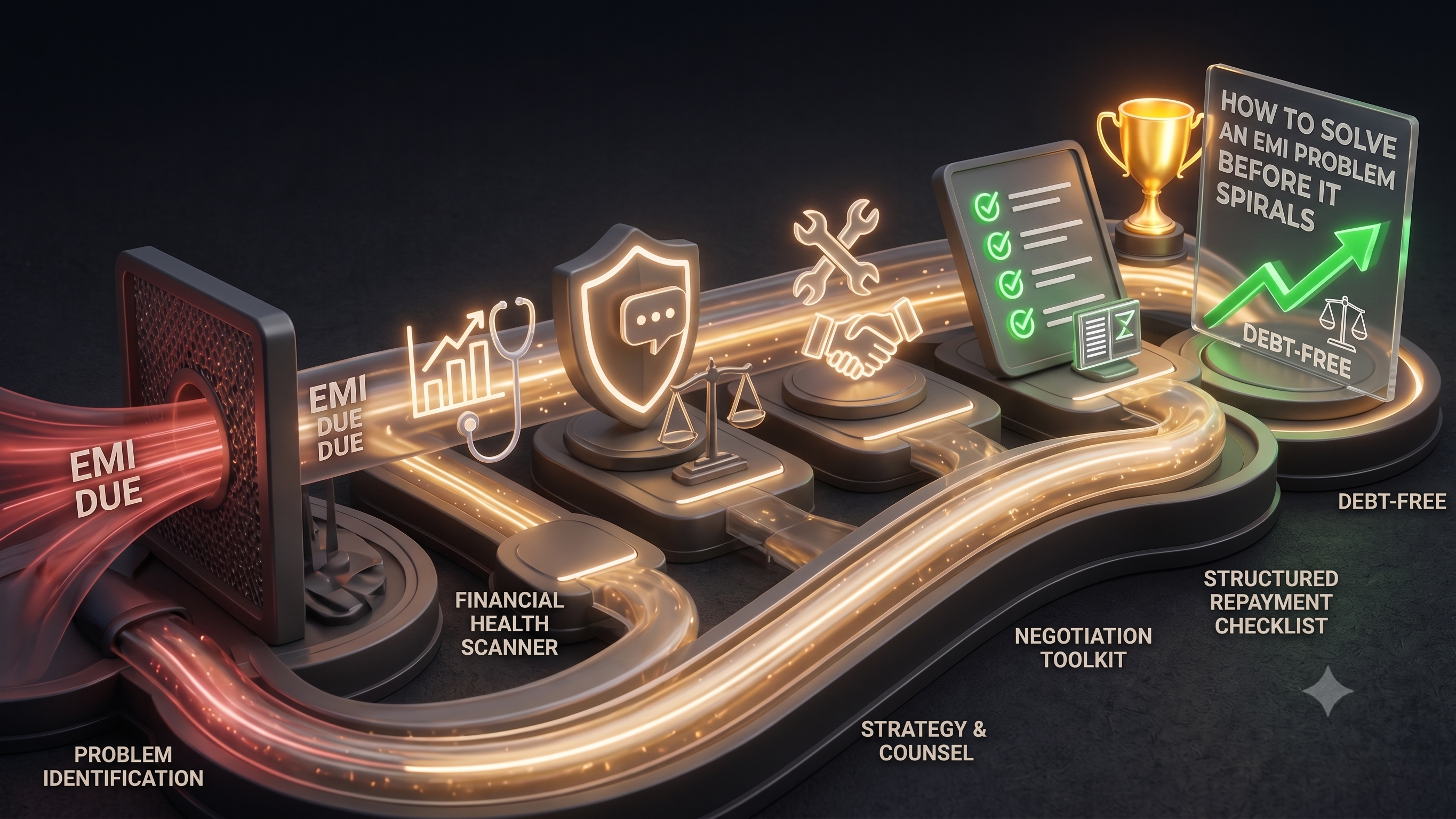
Table of contents6 sections
If you've missed a payment, felt your stomach drop when the reminder call came in, or started dodging the banking app altogether you already know what an EMI problem feels like. It rarely starts big. One skipped installment turns into two, the penalty charges stack up, and suddenly what looked like a manageable loan feels like it's running your life instead of the other way around.
The good news: it's almost never as unsolvable as it feels at the moment. What makes it worse is usually delay, not the debt itself. The earlier you name the problem and pick a direction, the more options stay open to you and the less likely you are to end up choosing between paying rent and paying an installment that's already spiralled out of proportion to your income.
Why an EMI Problem Builds Up So Quietly

Most people don't wake up one day buried in debt. An EMI problem usually creeps in through a handful of ordinary events: a job change, a medical bill, a slow month for a small business, or simply one loan too many stacked on top of an existing one. Each EMI on its own looked affordable when you signed up for it. It's the combination, plus one unexpected shock, that tips things over.
There's also a quieter cause: many borrowers don't fully account for how EMIs behave over time. Interest components shift, processing fees get added mid-tenure, and a loan that started at a comfortable monthly figure can grow heavier if a payment is missed and penal interest kicks in. That's how a single rough month turns into something recurring instead of a one-time hiccup and it's rarely just one loan. A personal loan taken to cover a wedding, a credit card used for an emergency, and a consumer durable EMI can all be running quietly in the background at once, each looking manageable alone but adding up to real pressure together.
The Real Cost of Ignoring It

The instinct when money is tight is to avoid the topic entirely, skip the call, mute the notifications, hope next month is better. It's understandable, but it's the one move that reliably makes things worse.
Here's what typically happens when an EMI problem is left alone instead of addressed:
- Late payment fees and penal interest are added on top of what you already owe
- Your credit score takes a hit, which affects every loan or card application after this one
- Recovery calls increase in frequency, adding real day-to-day stress
- The loan can eventually be tagged as a defaulted account, which is far harder to reverse than a delay caught early
None of this means you're out of options once it reaches this stage. It just means the sooner you act, the fewer of these consequences you'll actually deal with. Lenders and settlement platforms alike almost always have more room to work with in month two than in month twelve.
What Actually Helps When You're Behind on EMIs
There isn't one single fix that works for everyone. The right move depends on how far behind you are, how many loans are involved, and whether the shortfall is temporary or ongoing. A few paths worth understanding:
Talk to your lender before they talk to you. Most banks and NBFCs have restructuring options: a revised repayment schedule, a temporary moratorium, or a lower EMI stretched over a longer tenure. Lenders would generally rather adjust terms than chase a default, but they only offer this if you reach out proactively.
Consolidate if you're juggling multiple loans. If the pressure comes from several loans running at once a personal loan, a credit card, maybe a consumer durable loan combining them into a single, better-structured repayment can lower the total monthly outgo and cut down the mental load of tracking five due dates instead of one.
Consider a formal settlement when repayment genuinely isn't realistic. If your income has changed permanently, or the total outstanding has grown well beyond what any restructuring can fix, a structured loan settlement is worth exploring. This is where a platform like Zavo comes in. It works directly with lenders to negotiate a resolution on your behalf so you're not doing it alone against a collections team. It's not the first step for everyone, but for genuinely stuck cases, it can be the one that finally closes the chapter instead of dragging it out for years. The process typically involves reviewing your full loan portfolio, then negotiating a revised, one-time or restructured resolution with each lender individually, so the outcome fits your actual repayment capacity rather than a generic template.
Get an honest read on your numbers first. Before choosing a path, list every loan, the outstanding amount, the interest rate, and the minimum EMI. It's much easier to solve once you can see the whole picture instead of reacting to whichever lender called most recently.
Small Habits That Prevent the Next EMI Problem
Once you've dealt with the immediate crunch, a few habits keep the EMI problem from resurfacing:
- Keep EMIs under roughly 40% of your monthly take-home pay, even if a lender approves a higher amount
- Build a small buffer fund even one month's worth of EMIs so a single delayed salary or slow month doesn't turn into a missed payment
- Review all active loans twice a year rather than only when something goes wrong
- Avoid taking a new loan to cover an existing shortfall; it usually just adds a new due date on top of the old one
When It's Time to Ask for Help
There's a natural point where things stop being something you can manage alone with better budgeting, and become something that needs a structured resolution usually when you're behind on more than one loan, when recovery calls have become a weekly occurrence, or when the total debt has clearly outgrown your income. At that stage, exploring a dedicated settlement route is a reasonable next step, since it puts a professional negotiation process between you and the lender instead of leaving you to handle collection pressure on your own, and it gives you a clear timeline instead of an open-ended standoff with recovery agents.
An EMI problem, no matter how it started, is a solvable situation not a permanent state. The path out looks different for everyone: some people just need to skip EMI stress with a short restructuring conversation, others need a more complete reset through settlement. What matters most is picking a direction instead of letting the calendar decide for you.
Frequently Asked Questions
Q1.What counts as an EMI problem versus a normal rough month?
A single missed payment that gets caught up the next month is a rough month. It becomes an EMI problem when missed payments start recurring, penalties are stacking, or you're avoiding contact with the lender.
Q2.Can I get EMI relief without hurting my credit score further?
Acting early gives you the best shot at this. Restructuring or a negotiated settlement, done proactively, generally causes far less credit damage than letting an account slide into default.
Q3.loan settlement the same as skipping EMIs?
No. Skipping EMIs without a plan just adds penalties and damages your credit profile. A structured settlement is a negotiated resolution with the lender, done deliberately rather than by default.
Q4.How do I know if I should restructure or settle?
If the shortfall is temporary a short-term income dip restructuring usually makes sense. If the debt has grown beyond what your income can realistically support even with a lower EMI, settlement is worth exploring.
Q5.Does having an EMI problem mean I'll never get another loan?
Not necessarily. How you resolve it matters more than the fact that it happened. A structured settlement or restructuring, followed by rebuilding your credit profile, keeps future borrowing possible.