
8 February 2025 · Aditi sharma
How to Get a Home Loan with a Low Credit Score?
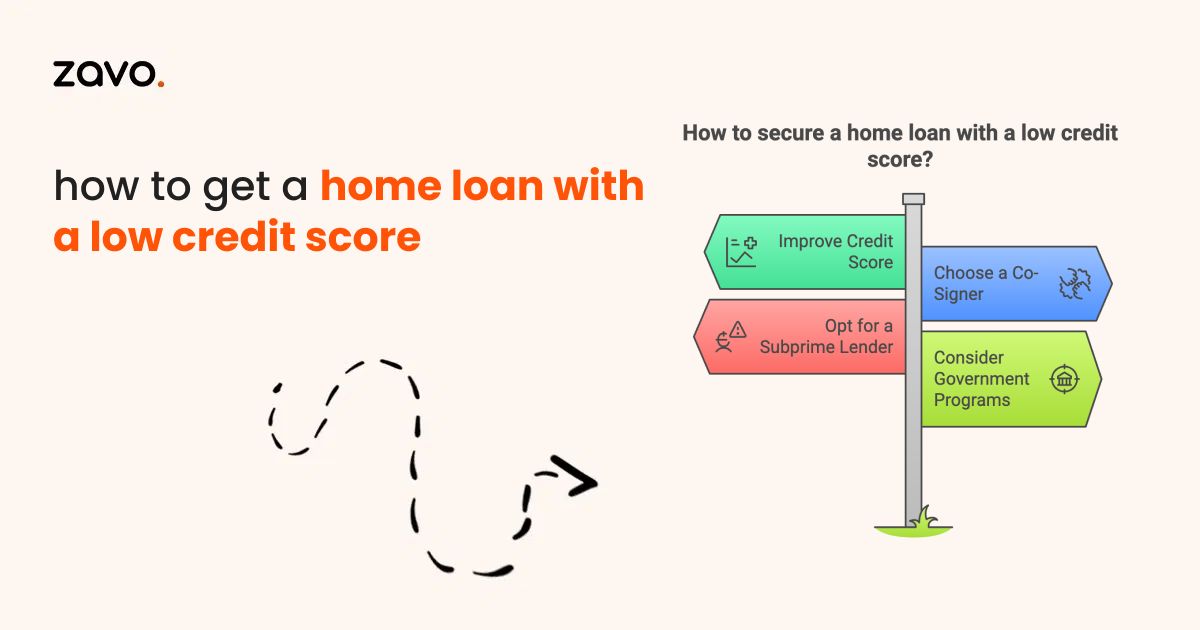
Table of contents8 sections
- 1. Increase Your Down Payment to Reduce Risk
- 2. Improve Your Debt to Income Ratio Before Applying
- 3. Apply with a Co-Applicant or a Guarantor
- 4. Consider Alternative Lenders Like NBFCs
- 5. Maintain a Clean Credit History Moving Forward
- 6. Choose a Smaller Loan Amount & Longer Tenure
- Final Thoughts
- Frequently Asked Questions (FAQs)
Owning a home is a dream for many, but if your credit score is low, that dream might seem just out of reach. A low CIBIL score signals to banks that you may have had trouble managing credit in the past, making them hesitant to approve your loan.
This can mean higher interest rates, stricter loan terms, or outright rejection. But don’t lose hope! Many homebuyers with low credit scores still manage to secure home loans by following smart financial strategies.
In this blog, we’ll walk you through practical, effective steps to improve your chances of getting a home loan, even with a low credit score. Whether it’s increasing your down payment, applying with a co-applicant, or choosing alternative lenders, these solutions can help you move one step closer to owning your dream home.

1. Increase Your Down Payment to Reduce Risk
One of the easiest ways to make lenders more comfortable approving your loan is to increase your down payment. Typically, banks require 10-20% of the property value as a down payment, but if your credit score is low, offering 30-40% upfront can work in your favor. When you contribute a higher amount, the bank’s risk reduces because the loan amount they’re lending is lower. This not only improves your approval chances but can also help you negotiate a better interest rate.
For example, if you’re buying a ₹50 lakh home, instead of paying ₹10 lakh (20%), try paying ₹15-20 lakh. This reassures the lender that you are financially responsible, even if your credit score is less than ideal. It also means lower EMIs for you, making the loan repayment more manageable.
2. Improve Your Debt to Income Ratio Before Applying
Lenders don’t just look at your credit score; they also evaluate your Debt-to-Income (DTI) ratio. This ratio measures how much of your monthly income is already being used to pay off existing loans and EMIs. If a large portion of your income is already tied up in loan repayments, banks might think you won’t be able to handle another loan, leading to rejection.
To improve your DTI ratio, focus on paying off smaller debts first. If you have outstanding credit card bills, personal loans, or auto loans, clearing them before applying for a home loan can significantly boost your approval chances. Additionally, increasing your income sources such as taking up freelance work or renting out a property can strengthen your financial profile and make you appear less risky to lenders.
3. Apply with a Co-Applicant or a Guarantor
If your credit score is low, one of the best ways to strengthen your home loan application is to apply with a co-applicant who has a strong credit profile. A co-applicant is someone usually a spouse, parent, or sibling—who shares responsibility for the loan. This means their income and credit score are considered alongside yours, increasing your overall loan eligibility.
Another option is to have a guarantor, someone who agrees to take responsibility for the loan if you default. This reassures banks that even if you face financial difficulties, they will still get their money back. Having a co-applicant or guarantor with a high CIBIL score (750+) can help you secure better loan terms, lower interest rates, and a higher loan amount.
4. Consider Alternative Lenders Like NBFCs
If traditional banks reject your loan application due to a low credit score, don’t worry there are other options. Non-Banking Financial Companies (NBFCs) and housing finance companies (HFCs) tend to be more flexible than banks when it comes to lending criteria. While they might charge slightly higher interest rates, they are often willing to lend to borrowers with low credit scores.
NBFCs also customize loan options based on your income and repayment capacity, giving you a better chance of getting approved. If you’ve faced rejection from a bank, consider researching NBFCs that specialize in home loans for low credit score applicants. Just make sure to compare their interest rates, fees, and loan terms before making a decision.
5. Maintain a Clean Credit History Moving Forward
Even if your credit score is low right now, taking small steps toward improving your financial habits can make a huge difference. Lenders want to see consistent financial discipline, so start by making sure all your existing EMIs, credit card bills, and utility payments are paid on time.
Avoid maxing out your credit cards keep your usage below 30% of your total limit to show that you’re managing your credit well. Also, refrain from applying for multiple loans at once, as every credit inquiry lowers your score slightly. The more responsible you are with your finances, the better your credit score will be over time, improving your chances of future loan approvals.
6. Choose a Smaller Loan Amount & Longer Tenure
Another strategy to increase your chances of loan approval is to apply for a smaller loan amount instead of a large one. A lower loan amount means less risk for the lender, making it more likely that your application will be accepted even if your credit score is not ideal.
Additionally, opting for a longer tenure (20-30 years) can help reduce your monthly EMI burden, making the loan more manageable for you. While this may mean paying more interest in the long run, it increases your approval chances and allows you to own a home sooner rather than later. Once your financial situation improves, you can prepay a portion of the loan to reduce the total interest paid.
Final Thoughts
A low credit score doesn’t have to be a roadblock on your journey to homeownership. By increasing your down payment, improving your debt to income ratio, applying with a co-applicant, and exploring alternative lenders, you can still secure a home loan despite a low CIBIL score. The key is to plan strategically, show financial discipline, and demonstrate to lenders that you’re a responsible borrower.
Home loan growth slowed in June 2024, impacting overall retail credit, according to a CIBIL report. If your credit score isn’t where you want it to be, don’t stress small steps today can lead to big improvements over time. Meanwhile, consider flexible lending options that align with your financial situation. With patience and the right strategy, your dream home is still possible!
Looking for expert loan advice? Let zavo help you!
✔️ Instant Loan Eligibility Check
✔️ Lowest Interest Rates
✔️ Quick Approval with Minimal Documentation
Frequently Asked Questions (FAQs)
1. Can I get a home loan with a CIBIL score of 600?
Yes, but you may face higher interest rates and stricter loan terms. Applying with a co-applicant or guarantor can improve approval chances.
2. What is the easiest way to improve my credit score?
Pay off existing debts, make timely payments, and reduce your credit card usage below 30% of your total limit.
3. Can I apply for a home loan from an NBFC with a low credit score?
Yes, NBFCs and housing finance companies are more flexible than banks and may approve loans for applicants with lower CIBIL scores.
4. Does a higher down payment improve my chances of approval?
Absolutely! A larger down payment (30-40%) reduces the lender’s risk and can lead to easier approval and lower interest rates.
5. How does a co-applicant help in getting a home loan?
A co-applicant with a high credit score increases loan eligibility, improves approval chances, and can help you secure better loan terms.