
8 February 2025 · Aditi sharma
How to Calculate Your Home Loan EMI: A Simple Guide
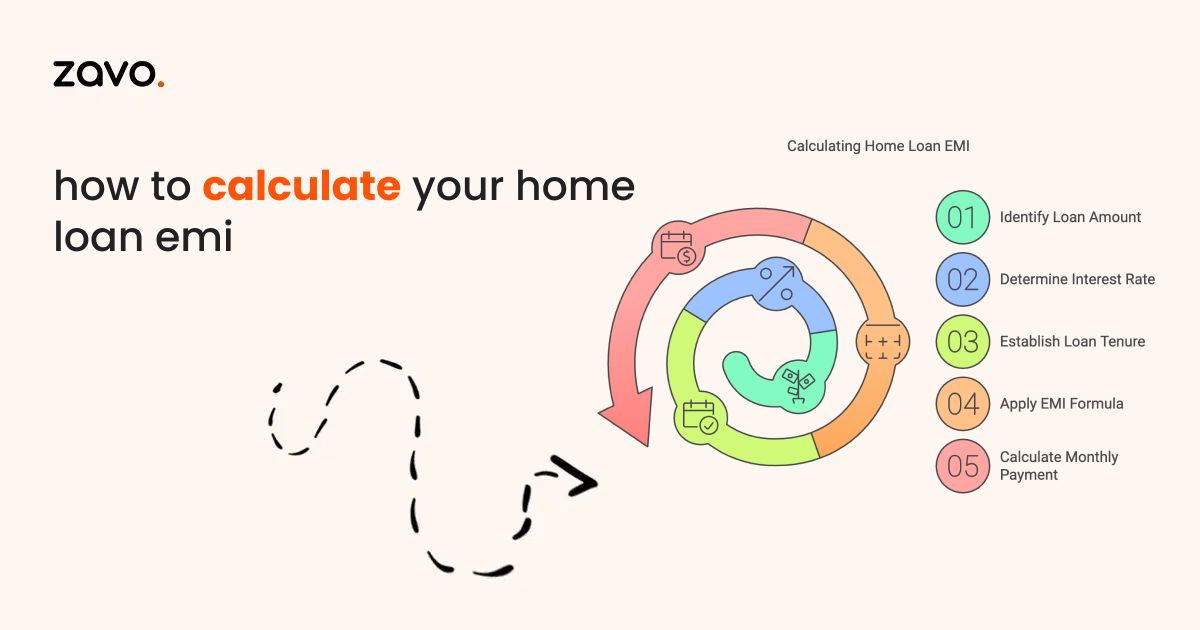
Table of contents7 sections
Buying a home is a big financial decision, and if you're planning to take out a home loan, one of the first things you need to figure out is your Equated Monthly Installment (EMI).
Your EMI determines how much you will pay every month toward repaying your loan, which directly impacts your monthly budget and long-term financial planning.
But don’t worry! Understanding how to calculate your home loan EMI doesn’t require you to be a math genius. This blog will break it down into simple steps so you can confidently estimate your EMIs and plan your home purchase wisely.

What is an EMI and Why Does It Matter?
Before we jump into the calculations, let’s first understand what EMI means and why it’s important.
What is EMI?
EMI (Equated Monthly Installment) is the fixed amount you pay every month to your lender until you fully repay your home loan. Each EMI consists of two parts:
✔️ Principal Amount – The actual loan amount you borrowed.
✔️ Interest Component – The cost of borrowing, which is calculated based on your loan’s interest rate.
At the beginning of your loan tenure, a larger portion of your EMI goes toward interest payments, while the principal repayment increases over time.
Why Should You Calculate Your Home Loan EMI?
Knowing your EMI in advance helps you:
✅ Plan Your Budget – Helps you understand how much of your monthly income will go toward loan repayment.
✅ Compare Loan Offers – You can evaluate different lenders and choose a loan that fits your financial comfort zone.
✅ Avoid Over-Borrowing – Ensures you don’t take on a loan that is difficult to repay.
The EMI Calculation Formula
Home loan EMIs are calculated using the following standard formula:

Where:
-P = Loan Amount (Principal)
-R = Monthly Interest Rate (Annual Interest Rate ÷ 12)
-N = Loan Tenure in Months (Loan Years × 12)
Sounds complicated? Don't worry! Let’s break it down step by step.
Step-by-Step Guide to Calculating Home Loan EMI
Now, let’s apply this formula to a real-world example so you can see how it works.
Step 1: Determine Your Loan Amount (P)
Decide how much you need to borrow to buy your home. This is the principal amount.
Example: Let’s say you take a loan of ₹20,00,000 (₹20 lakh).
Step 2: Find the Monthly Interest Rate (R)
Your lender provides the interest rate annually, but for EMI calculation, you need the monthly rate.
Example: If the annual interest rate is 8%, the monthly interest rate would be: 8%/12 = 0.666777%
Step 3: Determine Your Loan Tenure (N)
The number of years you choose for repayment must be converted into months.
Example: If your loan tenure is 20 years, then: 20×12=240 months
Step 4: Plug in the Values and Calculate EMI
Let’s apply the values into the EMI formula:

Final EMI: After calculation, the monthly EMI comes out to approximately ₹16,729.
Want a Faster Way? Use an Online EMI Calculator!
Doing this manually can be tricky, especially when dealing with large numbers. The easiest way to calculate your EMI is by using an online EMI calculator. Simply enter your loan amount, interest rate, and tenure, and the calculator will instantly show your EMI, total interest paid, and total loan repayment amount.
Try a Loan EMI Calculator Today! It helps you compare different loan scenarios and make an informed decision.
Factors That Affect Your Home Loan EMI
Your EMI is influenced by several factors. Let’s take a closer look at how they impact your repayment amount:
1. Loan Amount (Principal)
The higher the loan amount, the higher your EMI. If you borrow less, your EMI will be more affordable.
Tip: Try to make a higher down payment so you can reduce the loan amount and save on interest.
2. Interest Rate
A higher interest rate increases your EMI, while a lower rate makes repayments more affordable.
Tip: Choose a lender offering the best possible interest rate by comparing home loan options.
3. Loan Tenure
A longer tenure results in a lower EMI, but you’ll pay more interest over time. A shorter tenure means higher EMIs, but you’ll clear your loan faster and pay less interest.
Tip: Choose a tenure that balances affordable EMIs with less overall interest.
4. Prepayment & Extra Payments
Making extra payments toward your principal (if allowed by your lender) reduces your loan burden and total interest paid.
Tip: Opt for a floating rate loan if you plan to prepay your loan early, as many banks don’t charge prepayment penalties on floating loans.
Final Thoughts
Calculating your home loan EMI before borrowing is one of the smartest financial moves you can make. It helps you:
✔️ Understand your monthly obligations.
✔️ Compare different loan options.
✔️ Avoid over-borrowing and financial stress.
Will home loan EMIs drop? Here’s what an RBI rate cut could mean for borrowers.
The RBI’s repo rate plays a key role in shaping home loan interest rates. If the RBI lowers rates, banks typically follow suit, reducing lending rates and making home loans more affordable—whether fixed or floating.
Fixed-rate loans offer stability with consistent EMIs, while floating rates let you benefit from rate cuts. Choose wisely based on your financial goals and ensure your home loan stays within your budget!
Pro Tip: Always consider additional costs like processing fees, prepayment charges, and hidden costs when selecting a loan.
If you're ready to take the next step, use an online EMI calculator to experiment with different loan amounts, interest rates, and tenures—it’s quick, easy, and super helpful!
Looking for a home loan? Let zavo help you!
✔ Instant Loan Eligibility Check
✔️ Lowest Interest Rates
✔️ Quick Approval with Minimal Documentation
Frequently Asked Questions (FAQs)
1. Can I reduce my EMI during the loan tenure?
Yes! You can reduce your EMI by prepaying a part of your loan or by negotiating a lower interest rate with your lender.
2. What happens if I miss an EMI payment?
Missing an EMI negatively impacts your credit score and may lead to penalties. Always ensure timely payments to avoid issues.
3. Is it better to take a shorter loan tenure?
If you can afford higher EMIs, a shorter tenure saves you a lot of interest in the long run. But if you need flexibility, a longer tenure is better.
4. How often do floating interest rates change?
Floating interest rates are linked to market conditions and RBI policies. Banks typically revise them every 3 to 6 months.
5. Can I prepay my home loan anytime?
Yes! Most lenders allow partial or full prepayment. However, some charge a prepayment penalty, so check your loan agreement before proceeding.