
14 February 2025 · Aditi sharma
Who Can Apply for a Home Loan? Eligibility Criteria Explained
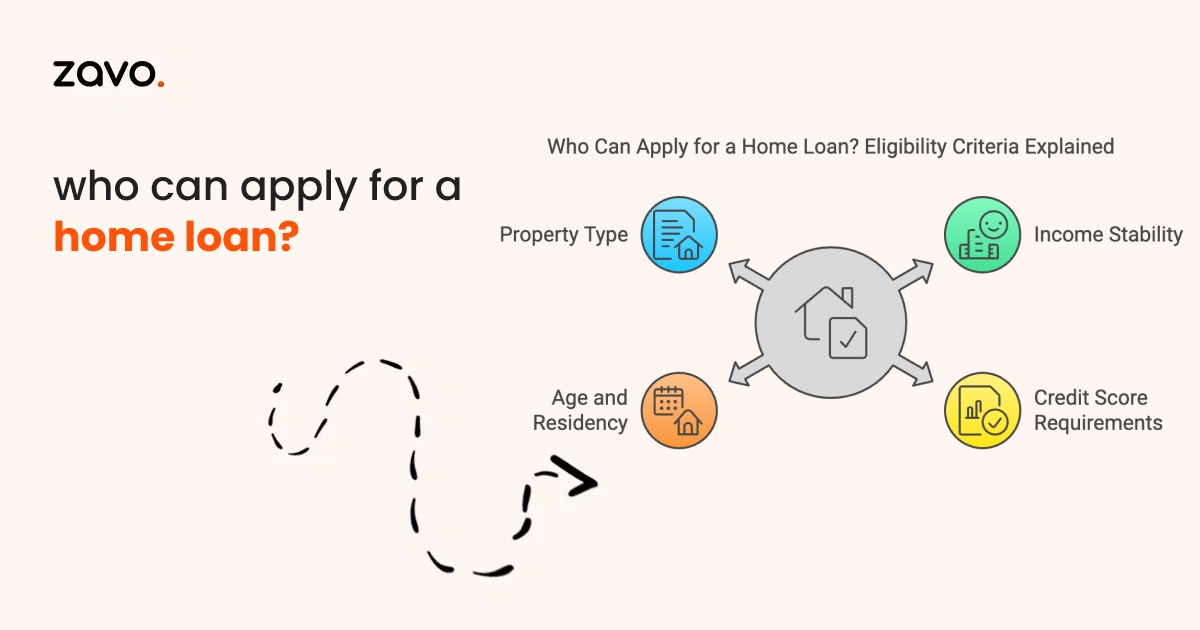
Table of contents7 sections
Owning a home is a dream for many, but securing a home loan is the key to turning that dream into reality. Before applying, understanding the eligibility criteria is crucial, as lenders assess several factors like income, credit score, employment type, and financial history.
Whether you’re a salaried professional, self-employed, or an NRI, this blog will help you determine if you qualify for a home loan and how to improve your chances of approval.

Step 1: Understanding Basic Home Loan Eligibility
Every bank and financial institution has set eligibility criteria to determine a borrower’s ability to repay the loan. Here’s what they look at:
✔️ Age Criteria
- The minimum age to apply for a home loan is 21 years.
- The maximum age limit varies from 60 to 70 years, depending on the lender and whether you're salaried or self-employed.
- A younger borrower gets the benefit of longer loan tenure (up to 30 years), making EMIs more manageable.
✔️ Income Stability
- Lenders assess monthly income to determine repayment capacity.
- For salaried individuals, a steady job history of at least 2 years is preferred.
- For self-employed individuals, banks look at business stability with at least 3 years of ITR (Income Tax Returns).
✔️ Credit Score (CIBIL Score)
- A 750+ credit score improves approval chances and helps get a lower interest rate.
- If your credit score is below 650, you might get a higher interest rate or face rejection.
- Regular EMI payments, low credit card usage, and avoiding multiple loan inquiries can boost your credit score.
✔️ Employment Type & Organization Reputation
- Salaried individuals working in government jobs, MNCs, or reputed private firms have a higher approval rate.
- Self-employed professionals like doctors, architects, and freelancers need to show consistent income proof.
✔️ Existing Liabilities & Debt-to-Income Ratio
- If you have multiple ongoing loans or credit card EMIs, your eligibility might be reduced.
- Lenders prefer a Debt-to-Income (DTI) ratio of below 40%, meaning your existing debts should not exceed 40% of your income.
✔️ Nationality
- Indian residents, NRIs (Non-Resident Indians), and PIOs (Persons of Indian Origin) can apply for home loans.
- NRIs may need additional documents like an NRI bank account, overseas salary slips, and work visa details.
Use an online home loan eligibility calculator to check your loan amount eligibility before applying.
Step 2: Home Loan Eligibility for Different Applicant Types
Not everyone earns a fixed monthly salary, so eligibility rules differ based on employment type. Let’s break it down:
For Salaried Individuals
- Must be employed in a government job, MNC, or reputed private firm.
- Minimum 2 years of work experience required.
- Higher eligibility if employed in high-income sectors like IT, banking, healthcare, etc.
For Self-Employed Individuals & Business Owners
- Must have a stable business running for at least 3 years.
- Need to provide ITR, audited financials, and profit/loss statements.
- Business loans, commercial properties, and office premises loans may also be considered.
For NRIs & Overseas Indians
- Must have valid work permit, NRI bank account, and overseas salary proof.
- Loan tenure is typically lower (10-15 years) than for Indian residents.
- Some banks require an NRI co-applicant or local representative.
For Joint Applicants & Co-Borrowers
- Applying with a spouse, parent, or sibling increases the loan amount eligibility.
- Both applicants’ incomes are combined to boost borrowing capacity.
- If the co-applicant is a woman, some banks offer lower interest rates.
Example: Rahul (salaried) and Priya (self-employed) apply together for a ₹70 lakh home loan. Since their combined income is ₹1.5 lakh per month, they qualify for a higher loan amount.
Adding a co-borrower can help if your income is low or unstable.
Step 3: Documents Required for a Home Loan

Having all required documents ready speeds up the approval process. Here’s what you’ll need:
✔️ Identity & Address Proof: Aadhaar Card, PAN Card, Passport, or Voter ID.
✔️ Income Proof
- Salaried individuals: Last 3 months’ salary slips, Form 16, latest ITR.
- Self-employed: Last 3 years’ ITR, profit/loss statements, GST filings.
✔️ Bank Statements: Last 6-12 months’ bank statements to show financial stability.
✔️ Property Documents: Sale agreement, builder’s approval plan, and title deed.
✔️ Employment Proof: Appointment letter, offer letter, or business registration certificate.
Pro Tip: Upload documents online for a faster and hassle-free application process.
Step 4: How to Improve Your Home Loan Eligibility?
If you don’t meet the eligibility criteria, here are some ways to improve it:
- Boost Your Credit Score – Pay off existing EMIs, reduce credit card usage, and clear outstanding loans.
- Opt for a Longer Tenure – Choosing a 25-30 year tenure reduces EMI burden and increases eligibility.
- Add a Co-Borrower – A joint application increases loan approval chances and amount.
- Clear Existing Debts – Paying off personal loans or credit cards improves your DTI ratio.
- Increase Your Income Proof – Declare rental income, bonuses, and passive income sources.
Example: Neha had a credit score of 680 and got rejected. She cleared her credit card dues, waited six months, and reapplied with a score of 755—this time, her loan got approved.
Pro Tip: Avoid applying for multiple loans at the same time, as too many inquiries can hurt your credit score.
Additional Considerations
Here are three certain things to consider while applying for a home loan:
1. Property Value and Type: The value and type of property being purchased also impact the eligibility of loan. Lenders conduct a property valuation to ensure it meets their criteria. Properties with clear titles, located in approved areas, and constructed according to legal norms are more likely to get approved.
2. Home Loan Amount Eligibility: Financial institutions typically require a down payment of 10-20% of the property's value. A higher down payment reduces the loan amount and can improve the chances of approval, as it indicates the applicant's financial capacity and commitment.
3. Loan Tenure: The loan tenure, or the duration for which the loan is taken, affects eligibility. Longer tenures result in lower monthly instalments, making it easier for applicants to meet the debt-to-income ratio criteria. However, this also means higher interest payouts over the loan period.
Final Thoughts
Securing a home loan is a significant step toward achieving your dream of homeownership. While anyone can apply, getting approval depends on meeting the lender’s eligibility criteria—from maintaining a good credit score and stable income to managing existing liabilities and ensuring the right documentation.
By understanding these requirements in advance, you can prepare strategically, improve the eligibility of loan, and enhance your chances of securing the best possible interest rates and loan terms. Whether you’re a salaried professional, self-employed, or an NRI, careful financial planning can make the entire home loan process smoother and faster.
If you’re ready to take the next step, start by checking the eligibility of loan, comparing lenders, and gathering the necessary documents. With the right approach, you’ll be one step closer to unlocking the door to your dream home.
Looking for a home loan? Let zavo help you!
✔️ Instant Loan Eligibility Check
✔️ Competitive Interest Rates
✔️ Quick Processing with Minimal Documentation
Frequently Asked Questions (FAQs)
1. Can I get a home loan with a low credit score?
Yes, but lenders may charge higher interest rates, and approval chances are lower. It’s best to improve your score before applying.
2. How much home loan can I get on my salary?
Banks usually offer loans up to 60 times your monthly salary, depending on credit history and liabilities.
3. Can I apply for a home loan without a co-applicant?
Yes, but adding a spouse or parent as a co-borrower increases eligibility and loan amount.
4. What is the minimum salary required for a home loan?
Most lenders require a minimum monthly salary of ₹25,000 - ₹30,000.
5. Can NRIs apply for a home loan in India?
Yes, but they need a valid work visa, overseas salary proof, and NRI bank account as per bank policies.