30 January 2025 · Aditi sharma
What Are Personal Lines of Credit?
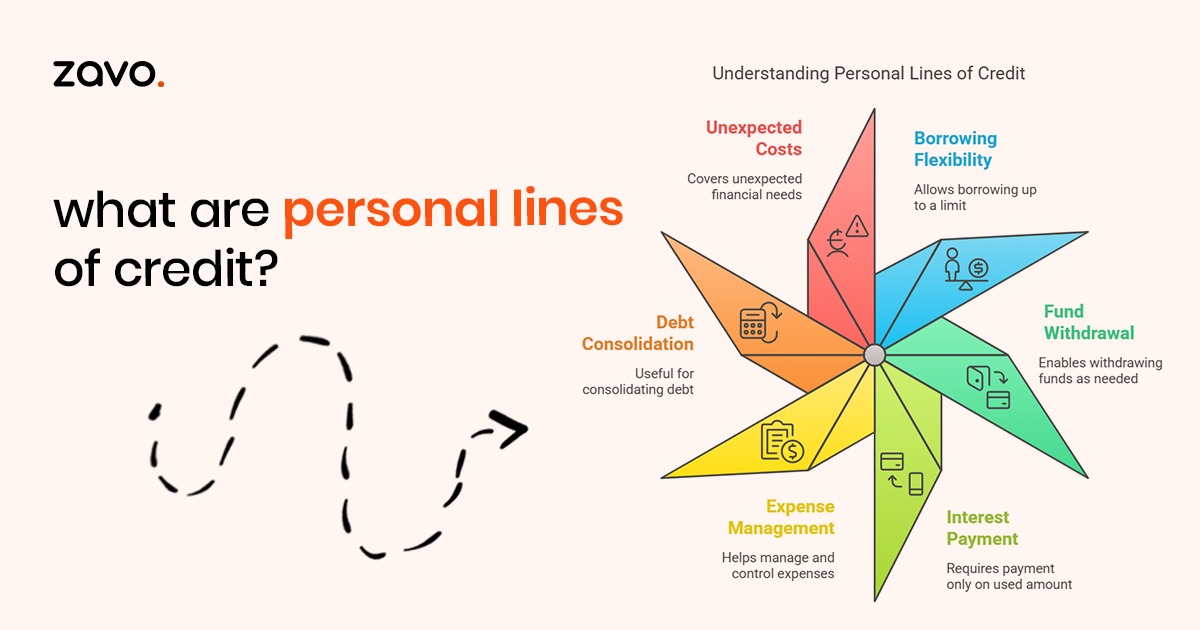
Table of contents9 sections
- What is a Personal Line of Credit (PLOC)?
- Key Features of a Personal Line of Credit:
- How Does a Personal Line of Credit Work?
- Types of Lines of Credit: Understanding Your Options
- Who is Eligible for a Personal Line of Credit?
- Pros and Cons of a Personal Line of Credit
- How a Personal Line of Credit Affects Your Credit Score
- Final Thoughts
- Frequently Asked Questions (FAQs)
When facing unexpected expenses or planning for large purchases, choosing the right financing option can be overwhelming. You might have heard of credit cards, personal loans, and home equity loans, but have you considered a personal line of credit (PLOC)?
A personal line of credit (PLOC) provides flexible borrowing, allowing you to withdraw funds as needed rather than receiving a lump sum upfront. Similar to a credit card, it offers on-demand access to funds but typically comes with lower interest rates and greater spending flexibility.
However, like any financial product, a PLOC has both advantages and drawbacks, making it essential to evaluate whether it aligns with your specific financial needs.
In a significant financial development, India has extended a ₹487.60 crore credit line to Mauritius for the replacement of 100 km of outdated water pipelines.
This initiative marks the first-ever rupee-denominated credit under India's IDEAS scheme, reinforcing India's commitment to socio-economic development in the Global South. The project highlights India's ongoing efforts to support infrastructure and sustainability initiatives in partner nations.
In this detailed blog, we’ll explore:
✅ What a personal line of credit is and how it works.
✅ The differences between PLOCs, personal loans, and credit cards.
✅ Who qualifies for a PLOC and how to apply.
✅ The benefits and drawbacks of a personal line of credit.
✅ Repayment methods and their impact on credit scores.
By the end of this article, you’ll have a clear understanding of whether a personal line of credit is the right financial tool for you.
What is a Personal Line of Credit (PLOC)?
A personal line of credit is a revolving credit account that allows you to borrow money up to a set credit limit and pay interest only on the amount used. Unlike a personal loan, which provides a fixed sum of money repaid in installments, a PLOC functions similarly to a credit card, where you can borrow, repay, and borrow again as needed.
Key Features of a Personal Line of Credit:
✔ Flexible Borrowing: You can withdraw money anytime within your credit limit.
✔ Revolving Credit: As you pay off the borrowed amount, the credit becomes available again.
✔ Lower Interest Rates: Typically lower than credit card interest rates but higher than secured loans.
✔ No Collateral Required: Most PLOCs are unsecured, meaning no assets are needed for approval.
✔ Variable Interest Rates: Interest rates fluctuate based on market conditions, making monthly payments unpredictable.
How Does a Personal Line of Credit Work?
A personal line of credit operates in two distinct phases:
1. Draw Period (Borrowing Phase)
- Once approved, you enter the draw period, during which you can withdraw funds as needed.
- This period usually lasts two to five years, depending on the lender.
- You will receive a monthly bill reflecting any withdrawals, interest charges, and fees.
- Some lenders require minimum monthly payments (often interest-only payments), while others allow more flexible repayment.
2. Repayment Period (Payback Phase)
- Once the draw period ends, you can no longer withdraw money.
- You must now repay the borrowed amount in full through structured EMIs, which include both principal and interest payments.
- Depending on the lender, the repayment period may last several years.
Example: If you are approved for a PLOC of Rs.10,000, you can withdraw any amount up to this limit. If you borrow Rs.3,000, you will only pay interest on that Rs.3,000. If you repay Rs.1,500, your available balance increases back to Rs.8,500.
Types of Lines of Credit: Understanding Your Options
There are three major types of credit lines, each serving a unique purpose:
1. Personal Line of Credit (PLOC)
A personal line of credit is unsecured, meaning it does not require collateral. Your eligibility depends on your credit score, income, and debt-to-income ratio.
✔ Best for short-term cash needs, home repairs, or debt consolidation.
2. Home Equity Line of Credit (HELOC)
A HELOC is a secured line of credit where your home serves as collateral. Because it is backed by real estate, it typically comes with lower interest rates than PLOCs.
✔ Best for home renovations, large expenses, or leveraging home equity for better financial management.
3. Business Line of Credit
A business line of credit is available to business owners who need flexible access to funds for operational expenses, inventory purchases, or working capital. It can be secured (with collateral) or unsecured.
✔ Best for small business financing and managing fluctuating cash flow.
Who is Eligible for a Personal Line of Credit?
To qualify for a personal line of credit, you generally need:
✔ A credit score of at least 690 (good to excellent credit).
✔ Stable employment and a steady income.
✔ A low debt-to-income (DTI) ratio (preferably below 40%).
✔ A strong repayment history on previous loans or credit cards.
Some banks require you to have an account with them before applying for a PLOC. Certain lenders also offer secured PLOCs, where you can pledge savings or investments to increase approval chances.
Pros and Cons of a Personal Line of Credit
✅ Pros of a PLOC:
✔ Flexible Access to Funds: You can borrow as much or as little as you need within your credit limit, making it an excellent choice for unpredictable expenses.
✔ Only Pay Interest on What You Use: Unlike a loan, where you pay interest on the full amount, a PLOC only charges interest on the money withdrawn.
✔ Revolving Credit: As you repay, you regain access to funds, making it a long-term financial tool.
✔ No Collateral Required: Most personal lines of credit are unsecured, meaning you don’t risk losing your home or assets.
✔ Lower Interest Rates Than Credit Cards: A PLOC generally has lower interest rates than credit cards, making it a more affordable option for borrowing.
✔ Emergency Fund Alternative: Since it offers 24/7 access, it’s an excellent backup plan for unexpected emergencies.
❌ Cons of a PLOC:
❌ Higher Interest Rates Than Secured Loans: Because they are unsecured, PLOCs often have higher interest rates than home equity loans or secured credit options.
❌ Variable Interest Rates: Since interest rates fluctuate, monthly payments can increase unexpectedly, making budgeting difficult.
❌ Difficult Qualification Process: A strong credit history and high income are required to qualify, making it less accessible to those with lower credit scores.
❌ Potential for Overspending: A PLOC functions as a revolving credit line, making it easy to accumulate debt if not managed carefully.
❌ Fees and Maintenance Costs: Some lenders charge annual fees, withdrawal fees, or early repayment penalties, increasing the total cost of borrowing.
How a Personal Line of Credit Affects Your Credit Score
- Applying for a PLOC requires a hard credit inquiry, temporarily lowering your credit score.
- Making on-time payments improves your credit score and helps build your financial reputation.
- Maxing out your PLOC can hurt your credit utilization ratio, negatively impacting your credit score.
- Missing payments leads to penalties and a decline in your credit rating.
Tip: Keep your utilization ratio below 30% of your credit limit to maintain a healthy credit score.
Final Thoughts
A personal line of credit (PLOC) is a powerful financial tool that offers flexibility, lower interest rates than credit cards, and quick access to funds for those with strong credit and stable income. Whether you're dealing with unexpected expenses, home improvements, or debt consolidation, a PLOC can provide a convenient and cost-effective borrowing solution.
However, it’s essential to use this credit responsibly. Variable interest rates and the ease of repeated borrowing can lead to overleveraging, making repayment difficult if not carefully managed. As the Reserve Bank of India (RBI) has flagged rising risks in unsecured personal loans, borrowers must be extra cautious about accumulating excessive debt.
To make the most of a personal line of credit, always:
✔ Borrow only what you need and have a structured repayment plan.
✔ Monitor interest rate fluctuations to avoid unexpected financial strain.
✔ Ensure timely repayments to maintain a strong credit score.
While a PLOC can be a lifesaver, it requires financial discipline and a clear repayment strategy to prevent debt pitfalls. If managed wisely, it can be a reliable and efficient financial resource in times of need. Always compare lender offers, assess your financial situation, and make an informed decision before committing to any line of credit.
Before applying, compare lenders, interest rates, and terms to find the best option for your needs. If you need further assistance, reach out for expert financial guidance!
Frequently Asked Questions (FAQs)
1. How is a personal line of credit different from a personal loan?
A personal loan provides a lump sum upfront with fixed monthly payments, while a personal line of credit (PLOC) allows you to borrow as needed within a set limit, only paying interest on the amount used.
2. Does using a personal line of credit impact my credit score?
Yes, applying for a PLOC results in a hard inquiry, which can temporarily lower your score. However, making timely payments and keeping your credit utilization low can improve your score over time.
3. What are the common eligibility requirements for a PLOC?
Most lenders require a good credit score (typically 690+), stable income, low debt-to-income ratio, and a strong repayment history. Some banks may also require an existing account for eligibility.
4. Are there any fees associated with a personal line of credit?
Yes, some lenders charge annual maintenance fees, withdrawal fees, and even early repayment penalties. Always review the terms and conditions before applying.
5. Can I use a personal line of credit for any purpose?
Yes, a PLOC can be used for various purposes, including emergency expenses, home improvements, debt consolidation, or even business expenses. However, responsible borrowing is key to avoiding unnecessary debt.