
12 February 2025 · Aditi sharma
Personal Loan vs. Credit Card: Which One Should You Choose?
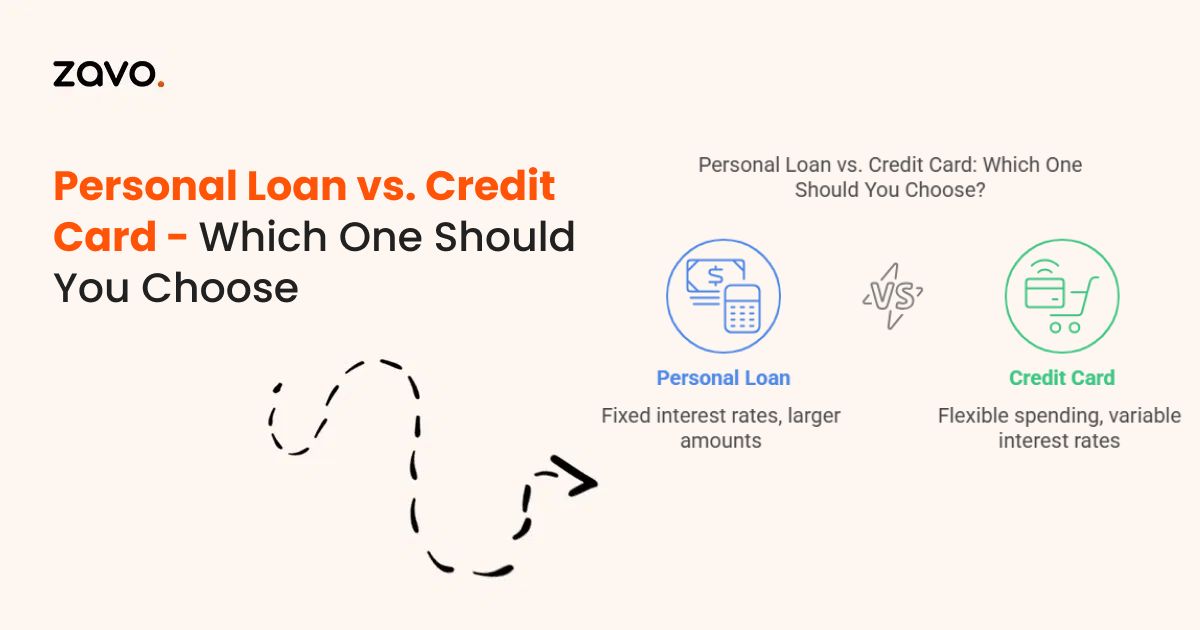
Table of contents8 sections
Life throws unexpected financial needs at us like a medical emergency, a dream wedding, an urgent home repair, or even a long overdue vacation.
In such situations, you need quick access to funds, and two common options are personal loans and credit cards.
But which one is the better choice?
Should you opt for a personal loan with fixed EMIs or a credit card with revolving credit?
The answer depends on your financial needs, repayment capacity, and spending habits. Let’s break it down in simple terms, so you can make the right choice for your situation.
Personal Loans: The Structured Option
A personal loan is a lump-sum amount of money that you borrow and repay over a fixed period of time with fixed monthly installments (EMIs). They typically come with lower interest rates than credit cards, especially for borrowers with a good credit score.
- Example: Imagine you need ₹3,00,000 for a home renovation. You can opt for a personal loan with a tenure of 3 years and an interest rate of 12%. Your EMI would be structured, meaning you’ll pay a fixed amount each month, and the loan will be fully paid off within 36 months, with interest already factored in.
- Advantages: Lower interest rates (especially for higher amounts), structured repayment schedule, fixed tenure, predictable monthly payments.
- Disadvantages: Might require more documentation, approval time can be longer, early repayment penalties in some cases.
Credit Cards: The Flexible Option
A credit card allows you to borrow money up to your credit limit and pay it back over time. If you pay off the balance in full each month, you avoid paying interest. However, if you carry a balance, high-interest rates can kick in.
- Example: Suppose you need ₹50,000 for an urgent medical expense. You can simply swipe your credit card and start using the credit. If you can pay it off within the month, you avoid interest entirely. However, if you carry the balance, you’ll face interest rates ranging from 24% to 36% annually, adding a significant cost to your purchase.
- Advantages of Credit Cards: Instant access to credit, flexibility in repayment, potential rewards (cashback, travel points), no need for collateral.
- Disadvantages of Credit Cards: High interest rates for balances carried forward, potential to overspend due to easy access to credit, late payment fees.
What’s the Difference Between a Personal Loan and a Credit Card?
Both a personal loan and a credit card help you borrow money, but they work very differently.
A personal loan gives you a lump sum amount, which you repay in fixed EMIs over a set period (usually 1-7 years). It’s best for big-ticket expenses where you need a structured repayment plan.
A credit card, on the other hand, gives you a credit limit that you can use as needed. You don’t have to borrow the entire amount at once, and as long as you pay the minimum due, you can keep using it. However, credit cards come with high interest rates if you don’t pay off the balance in full.
Example: Let’s say you need ₹2 lakh for an urgent medical expense.
- If you take a personal loan, you’ll receive the full amount upfront and repay it over time in fixed EMIs.
- If you use a credit card, you’ll either have to swipe multiple times (depending on your credit limit) or opt for credit card EMI conversion, which may have higher rates.
So, which one is better? Let’s compare :

When Should You Choose a Personal Loan?
A personal loan is ideal when you need a large amount of money and prefer a structured repayment plan. Here’s when it makes sense:
✔️ For Big Purchases: Need funds for a wedding, home renovation, or medical emergency? A personal loan is more practical.
✔️ Lower Interest Rates: Personal loan interest rates (9%-18%) are much lower than credit card interest rates (36%-48%).
✔️ Fixed EMIs for Easy Budgeting: Since personal loans come with fixed monthly installments, you know exactly how much you need to pay each month.
✔️ Longer Repayment Tenure: Unlike credit cards, where you must clear your dues quickly, these loans give you 1-7 years to repay.
Example: Rohan needs ₹5 lakh to renovate his home. A personal loan allows him to borrow the full amount at 12% interest and repay it over 5 years in fixed EMIs, making it affordable.
When Should You Choose a Credit Card?
A credit card is a better option for short-term expenses or when you need flexibility. Here’s when it makes sense:
✔️ For Everyday & Small Expenses: Buying a new phone, booking flights, or making online purchases? A credit card is a quick and convenient option.
✔️ 0% Interest (If Paid on Time): If you pay your total bill on or before the due date, you pay zero interest! This makes it a free borrowing option for short term needs.
✔️ Emergency Spending: Need urgent money but don’t have time to apply for a loan? A credit card gives you instant access to credit.
✔️ Reward Points & Cashback: Many credit cards offer cashback, travel miles, and rewards and giving you extra benefits.
Example: Priya wants to buy a ₹50,000 phone. Instead of taking a personal loan, she uses her credit card and repays the full amount within the billing cycle, paying zero interest while earning cashback.
Which One Should You Choose?
Choosing between a personal loan and a credit card largely depends on your specific financial needs and your ability to repay. Here’s a quick breakdown
Go for a Personal Loan if:
- You need a large amount of money (above ₹50,000) for an important life event (e.g., home renovation, debt consolidation, large medical bills).
- You prefer fixed monthly payments and a predictable repayment schedule.
- You have a strong credit score, which could qualify you for lower interest rates.
Go for a Credit Card if:
- You need quick access to a small amount (e.g., ₹20,000 to ₹50,000) for unexpected expenses or short-term purchases.
- You can pay off the balance in full each month, avoiding interest charges.
- You prefer flexible repayment terms and the potential to earn rewards or cashback.
Final Thoughts
Both personal loans and credit cards are useful financial tools, but they are best suited for different situations. If you need a larger amount of money for a specific purpose and prefer a structured repayment plan, a personal loan is likely your best bet. On the other hand, if you need smaller amounts of money for day to day expenses or want flexibility, a credit card might be the better option. Always weigh your interest rates, repayment capacity, and financial goals before making a decision.
Pro Tip: If you choose a credit card, always aim to pay off the balance before interest kicks in. If you choose a personal loan, make sure to stick to the repayment schedule and avoid taking on additional debt.
Need quick funds? zavo offers instant loans with flexible terms and competitive rates to help you navigate your financial needs seamlessly.
Apply now and get your funds instantly.
Frequently Asked Questions (FAQs)
1. Which has lower interest rates, a personal loan or a credit card?
A personal loan usually has lower interest rates (9%-18%), while credit card rates can go as high as 36%-48% if you don’t pay the full balance on time.
2. Can I use a credit card instead of taking a personal loan?
Yes, if you need a small amount and can repay in full within the interest-free period. But for larger expenses, a personal loan is more cost-effective.
3. Is it better to take a loan against a credit card or a personal loan?
A personal loan is usually better because credit card loans have higher interest rates (20%-40%) and may come with hidden fees.
4. Can I use both a personal loan and a credit card at the same time?
Yes! Many people use credit cards for everyday expenses and loans for big financial needs like home renovation or weddings.
5. How can I decide between a personal loan and a credit card?
Ask yourself:
✔️ How much money do I need? (Large = Loan, Small = Credit Card)
✔️ Can I repay quickly? (Yes = Credit Card, No = Loan)
✔️ Do I want fixed EMIs? (Yes = Loan, No = Credit Card)