
11 February 2025 · Aditi sharma
How to Get a Personal Loan with a Low Credit Score?
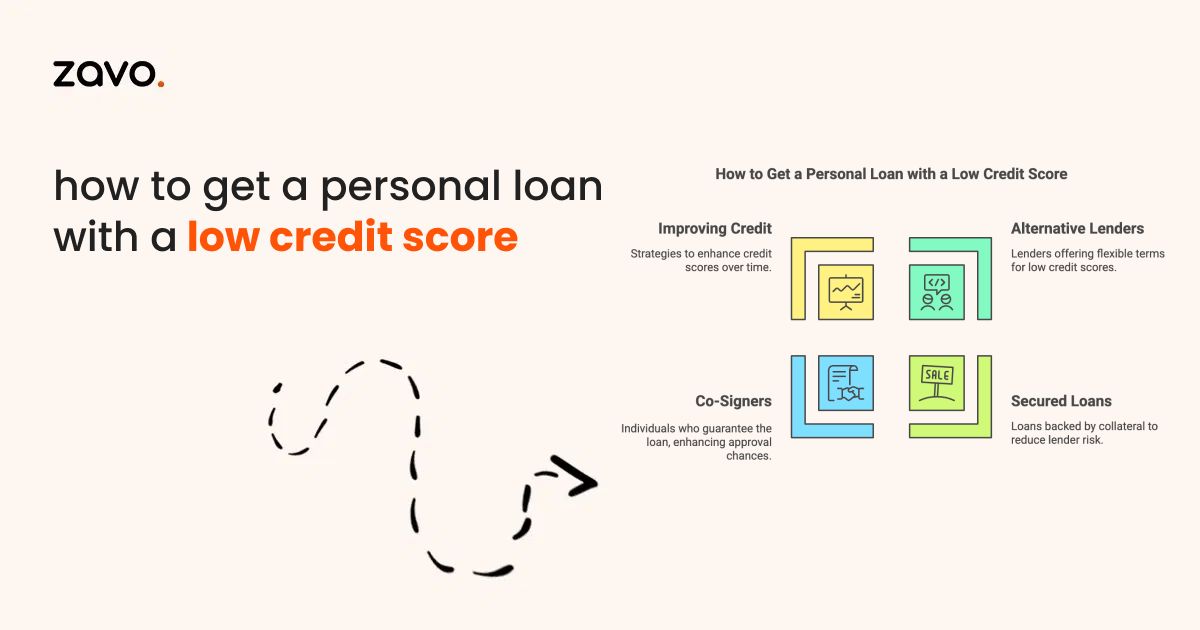
Table of contents5 sections
You need urgent cash for a medical emergency, home repair, or consolidating debts, but when you apply for a personal loan, the bank rejects your application because of a low score. Sounds frustrating, right?
The truth is, your credit score plays a crucial role in getting a personal loan, but having a low score doesn’t mean you’re out of options. Many lenders still provide loans to borrowers with less than perfect credit, but you may need to be a little smarter and more strategic in how you apply.
In this detailed blog, we’ll walk you through:
✔️ What a low credit score really means
✔️ How lenders assess your loan application
✔️ Smart strategies to improve your chances of approval
✔️ Where you can apply for a personal loan even with a poor credit score
What is Considered a Low Credit Score?

Before you panic about your credit score, let’s understand the numbers. Lenders in India primarily check your CIBIL score, which ranges between 300 and 900.
Here’s what your score means for loan approvals:
🔹 750-900 (Excellent): You’re a lender’s favorite! Expect the best interest rates and instant approvals.
🔹 650-749 (Good): You have decent approval chances, but rates might be slightly higher.
🔹 550-649 (Fair): Lenders may still approve you, but at high interest rates.
🔹 Below 550 (Poor): Getting a personal loan becomes tough, and you may need special loan options or a co-applicant.
Pro Tip: A credit score below 650 is considered risky by most banks, but some lenders still approve loans based on income and repayment ability.
How to Get a Personal Loan with a Low Credit Score
If your credit score isn’t great, you need to think strategically before applying. Here are the best ways to increase your chances of approval:
Apply with NBFCs or Online Lenders
Traditional banks prefer borrowers with a high credit score, but NBFCs (Non-Banking Financial Companies) and digital lenders are more flexible.
✔️ NBFCs focus more on income stability rather than just credit scores.
✔️ Digital lenders offer instant personal loans with minimal paperwork.
✔️ While interest rates may be slightly higher, approvals are easier than in banks.
Example: Amit’s credit score is 580, but he has a stable job earning ₹45,000 per month. While his bank rejected his loan application, an NBFC approved it at a slightly higher rate based on his income.
Offer a Guarantor or Apply with a Co-Applicant
If your credit score is low, adding a co-borrower or guarantor with a high credit score can significantly improve your chances.
✔️ A co-applicant (like a spouse or parent) shares the repayment responsibility.
✔️ A guarantor agrees to repay the loan if you default, making the lender more confident in approving your loan.
Example: Riya’s credit score is 540, but her father’s score is 780. She applies for a personal loan with him as a co-applicant and gets approved at a much better rate.
Show Proof of Strong Income & Job Stability
Even if your credit score isn’t great, lenders may still approve your loan if you have a strong financial profile.
✔️ A stable income (₹30,000+ per month) reassures lenders that you can repay.
✔️ If you work in a reputed company, lenders are more likely to approve your loan.
✔️ If you have additional income sources, such as freelancing or rental income, include that in your application.
Example: Kabir has a credit score of 610, but he earns ₹75,000 per month. His high salary convinces an NBFC to approve his loan despite his poor credit history.
Apply for a Secured Personal Loan
If getting an unsecured loan is difficult, you can apply for a secured loan, where you provide collateral.
✔️ Collateral options include: Fixed deposits, gold, property, or any valuable asset.
✔️ Since the lender has security, they may offer lower interest rates.
✔️ Even if your credit score is low, secured loans have higher approval chances.
Example: Sunita needs a ₹3 lakh loan, but her credit score is 550. Instead of an unsecured loan, she pledges her gold as collateral and gets approved easily at a low interest rate.
Apply for a Smaller Loan Amount
Lenders are less likely to approve large loans for people with low scores. Instead of ₹5 lakh, try applying for a lower amount like ₹1 lakh.
✔️ Smaller loans reduce lender risk, increasing approval chances.
✔️ Once you repay this small loan on time, your credit score improves.
✔️ After that, you can apply for a bigger loan with better interest rates.
Example: Raj applied for a ₹4 lakh loan and got rejected. He re-applied for ₹1.5 lakh, got approved, and after timely repayments, his credit score improved and making him eligible for a higher loan next time.
Improve Your Credit Score Before Applying
If you don’t need urgent funds, consider waiting for a few months and improving your credit score before applying.
✔️ Clear existing debts to lower your financial burden.
✔️ Avoid multiple loan applications and each rejection lowers your credit score!
✔️ Check your CIBIL report for errors and get them corrected.
✔️ Keep your credit utilization low and if your credit card limit is ₹1 lakh, try not to use more than ₹30,000 at a time.
Pro Tip: Even a 3-6 month improvement plan can boost your credit score significantly, saving you thousands in interest costs.
Mistakes to Avoid When Applying for a Personal Loan with a Low Credit Score
A personal loan can be a great opportunity to improve your credit score, but if you don’t approach it wisely, it can backfire and worsen your financial situation. If you have a low score, getting approved is already challenging, so you want to make sure you avoid common mistakes that could lead to higher interest rates, loan rejection, or financial stress.
Before you submit your loan application, here are some critical mistakes to avoid and how to get the best deal despite having a low score.
Not Planning Your Budget Before Applying
Getting a personal loan can feel like a relief, especially if you’re in urgent need of funds. But jumping into it without a budget can quickly lead to financial trouble.
✔️ Before you apply, assess your monthly income and expenses to ensure you can comfortably afford the EMIs.
✔️ Over-borrowing beyond your repayment capacity can make it difficult to keep up with payments, further damaging your credit score.
✔️ A well-structured budget helps you plan your repayments, avoid defaulting, and eventually improve your credit score.
Example: Raj applied for a ₹3 lakh loan, but after a few months, he realized his EMI was too high for his monthly budget. Struggling with payments, his credit score dropped even further.
Not Comparing Loan Offers Across Lenders
Not all lenders treat low credit score borrowers the same way. Some charge extremely high interest rates, while others offer more flexible options. If you don’t compare different lenders, you might end up paying way more than necessary.
✔️ Research different banks, NBFCs (Non-Banking Financial Companies), and online lenders before making a decision.
✔️ Use a Personal Loan EMI Calculator to compare how much your monthly payments will be under different loan terms.
✔️ Some lenders specialize in loans for people with low scores, so finding the right one can save you a lot of money.
Example: Priya took a loan from the first lender she found, only to realize later that another lender was offering the same loan with a 3% lower interest rate and a difference that could have saved her thousands of rupees.
Choosing the Wrong Loan Tenure
Your loan tenure (repayment period) plays a big role in how manageable your EMIs are. Many borrowers either choose an extremely short tenure (making EMIs too high) or a very long tenure (paying much more in interest over time).
✔️ Shorter tenure = higher EMIs but lower total interest paid.
✔️ Longer tenure = lower EMIs but higher total interest paid.
✔️ Choose a repayment period that balances affordability and interest savings.
Example: Neha chose a 3 year repayment plan because she wanted to clear her loan quickly. However, the high EMIs strained her budget, forcing her to miss payments. Had she opted for a 5-year tenure, her EMIs would have been lower and more manageable.
Applying for Multiple Loans at the Same Time
When you apply for multiple loans within a short period, lenders see it as a red flag—a sign of financial distress. This can further lower your credit score and reduce your chances of approval.
✔️ Instead of applying randomly, choose the lender most likely to approve you.
✔️ Too many hard inquiries on your credit report can make you look desperate for credit, which is a negative sign for lenders.
✔️ If you get rejected, wait and improve your credit score before reapplying elsewhere.
Example: Rohit applied for loans with five different lenders in a week, hoping at least one would approve him. Instead, all lenders saw multiple loan inquiries on his credit report and assumed he was financially unstable, leading to rejections across the board.
Not Checking Your Credit Report for Errors
Your credit report may have errors that are lowering your credit score unnecessarily. If you don’t check your report before applying for a loan, you might get rejected for mistakes that aren’t even your fault.
✔️ Request a free credit report from CIBIL or Experian and check for errors.
✔️ Look for incorrect late payments, old loans still marked as unpaid, or identity mix-ups.
✔️ If you find any mistakes, raise a dispute and get them corrected before applying for a loan.
Example: Aisha’s loan application was rejected because her credit report incorrectly showed an unpaid loan from 5 years ago. After disputing the error, her credit score jumped 50 points, and she was able to secure a loan with better terms.
Ignoring the Fine Print (Hidden Fees & Charges)
Many borrowers focus only on interest rates but ignore other fees that significantly impact the cost of the loan.
✔️ Processing fees can range from 1-5% of the loan amount.
✔️ Some lenders charge prepayment penalties if you want to repay early.
✔️ Late payment fees can be steep and damage your credit score further.
Example: Karan took a loan at 12% interest, thinking it was a great deal. Later, he discovered hidden fees totaling ₹10,000, making his loan far more expensive than expected.
Final Thoughts
Yes, securing a personal loan with a low score can be challenging, but it's far from impossible if you take the right approach. Instead of relying solely on traditional banks, explore NBFCs and online lenders that offer more flexible terms.
Boost your approval chances by applying with a co-applicant or providing collateral to lower the lender’s risk. If a large loan seems difficult to obtain, start with a smaller amount to improve your creditworthiness over time.
Most importantly, work on strengthening your credit score before applying, as even a slight improvement can help you secure better interest rates and loan terms. With the right strategy, you can turn financial hurdles into stepping stones toward better borrowing opportunities.
A personal loan should help you move forward financially, not put you into a debt trap. Borrow wisely, repay on time, and use this opportunity to build a stronger financial future!
At zavo, we make borrowing simple—even for those with less-than-perfect credit scores.
Need quick funds? Apply now with zavo and get money in your account within minutes!
Frequently Asked Questions (FAQs)
1. Can I get a personal loan with a CIBIL score below 600?
Yes, but you may need a co-applicant, secured loan, or a strong income profile to increase approval chances.
2. Which lenders offer personal loans to people with low credit scores?
NBFCs like Bajaj Finserv, Tata Capital, and online lenders like zavo offer personal loans for low scores.
3. Will taking a personal loan improve my credit score?
Yes! If you make timely EMI payments, your credit score will improve, making it easier to qualify for future loans.
4. Should I apply for multiple loans at once to increase my chances?
No! Multiple rejections lower your credit score further. Apply strategically.
5. How can I quickly improve my credit score before applying?
Clear outstanding debts, pay EMIs on time, reduce credit card usage, and check your credit report for errors.