
25 March 2026 · Mayank Dabral
How to Negotiate Personal Loan Settlement Smartly
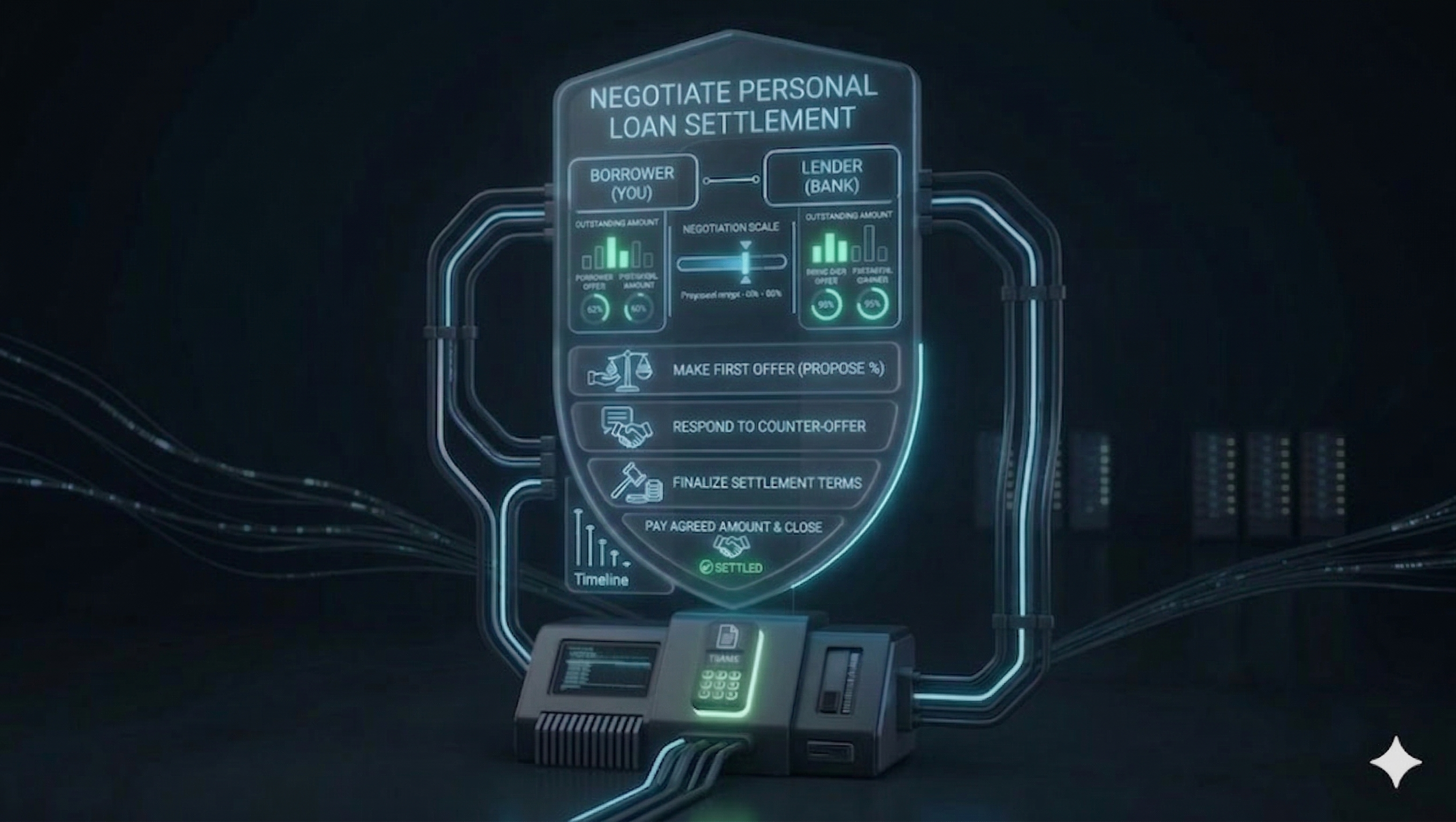
Table of contents11 sections
- What Is Personal Loan Settlement?
- When Should You Consider Loan Settlement?
- Why Most People Fail at Negotiating Loan Settlement
- How to Prepare Before Negotiating
- Step-by-Step: How to Negotiate Personal Loan Settlement
- How Much Can You Negotiate?
- Important: How Loan Settlement Affects CIBIL
- Mistakes to Avoid During Loan Settlement
- Why Zavo Can Make the Process Easier
- Final Thoughts
- Frequently Asked Questions
When monthly EMIs start feeling heavier than your income, the pressure doesn’t just stay in your bank account it follows you everywhere. It shows up in missed calls from recovery teams, sleepless nights, and that constant fear of “what happens next?” For many borrowers, especially those facing job loss, business slowdown, medical emergencies, or a sudden cash crunch, loan settlement becomes more than a financial option; it becomes a way to breathe again.
But here’s the truth: loan settlement is not about escaping debt. It’s about negotiating responsibly when full loan repayment is no longer realistic. If handled the right way, it can help you reduce your burden, stop the stress spiral, and move toward a cleaner financial restart. If handled the wrong way, it can cost you more through poor negotiation, hidden agents, weak documentation, or long-term credit damage.
That’s why knowing how to negotiate personal loan settlement matters so much.
In India, lenders are paying closer attention to credit behaviour than ever before. According to TransUnion CIBIL, even one or two missed payments can hurt a borrower’s credit profile in a meaningful way. Today, it’s not just about how much you borrow; lenders also closely track how responsibly you repay. CIBIL has also highlighted a rise in missed payments across personal loans and credit cards, especially in fast-growing unsecured credit categories.
If you’re thinking about loan settlement, the first thing to remember is this: don’t panic, and don’t rush into a decision. Many borrowers make the mistake of accepting the first offer a lender gives them, but that’s not always the best move. The smarter approach is to stay calm, understand your options, negotiate carefully, keep every conversation documented, and work with a platform that connects directly with lenders instead of sending you through confusing middlemen.
This guide explains exactly how to do that.
What Is Personal Loan Settlement?

Personal loan settlement is basically an agreement between you and your lender where they agree to accept a lower one time payment instead of the full loan amount you still owe. This usually happens when someone is going through real financial stress and can no longer manage their EMIs the way they originally promised.
In simple terms:
1 - You owe a certain amount
2 - You explain your financial difficulty
3 - The lender evaluates your repayment capacity
4 - A one-time reduced amount may be offered
5 - Once paid, the account is marked as “settled”, not “closed” in the normal sense
This difference is important. TransUnion CIBIL has made it clear that a “settled” status can negatively affect your credit profile and may make it harder to get loans in the future. That’s why loan settlement should be seen as a last-resort recovery option, not something to choose first if you can still manage regular repayments.
When Should You Consider Loan Settlement?
You should consider loan settlement only when the problem is real, serious, and unlikely to improve immediately.
You may be a strong candidate if:
1 - You’ve already missed multiple EMIs
2 - Your income has dropped significantly
3 - You’ve lost your job or business revenue
4 - You’re dealing with a medical emergency
5 - You can pay a smaller one-time amount, but not the full loan balance.
6 - You want to settle the debt before it turns into legal trouble or stronger recovery action.
You should avoid settlement if:
1 - You can still manage EMIs with restructuring
2 - You can ask for a short break in EMIs or some temporary relief.
3 - You just want to reduce your payment even though you can still afford to repay.
4 - You don’t have proper proof of financial hardship yet.
A smart borrower should first consider options such as loan restructuring, EMI relief, or a short extension before choosing loan settlement.
Why Most People Fail at Negotiating Loan Settlement

Most borrowers fail because they negotiate emotionally, not strategically.
Here’s what usually goes wrong:
1 - They speak to random agents instead of the lender
2 - They accept verbal promises without written confirmation
3 - They don’t know how much they can actually afford
4 - They reveal desperation too early
5 - They don’t present proof of hardship
6 - They agree to a number, then fail to pay it on time
This is exactly why a transparent platform matters. On Zavo’s settlement page, the brand strongly positions itself around lender approved settlement options, no middlemen, zero settlement fees, and reduced collection pressure once the process starts. It also states that settlement outcomes still depend on the lender’s decision and the borrower’s individual case, an important sign of realistic, trust-based communication.
How to Prepare Before Negotiating
Preparation can change your settlement outcome more than negotiation itself.
1. Know your total outstanding
Check:
- Principal pending
- Interest accrued
- Late fees
- Penal charges
- Collection charges (if any)
2. Choose your realistic lump-sum limit
Don’t start by saying what you can “maybe” arrange. Know your absolute maximum.
3. Collect proof of hardship
This is powerful. Gather:
- Termination letter / salary slips
- Medical bills
- Bank statements
- Business loss records
- Rent dues or family emergency proof
4. Check your credit report
Since a settled account impacts your credit profile, review your existing obligations first.
5. Create a negotiation script
Go in with facts, not fear.
Step-by-Step: How to Negotiate Personal Loan Settlement
Step 1: Contact the lender early
The longer you wait, the worse the pressure becomes. Once EMIs are overdue, lenders may still be open to structured conversations especially if you’re proactive.
Step 2: Explain hardship clearly
Be honest and specific:
- Why repayment failed
- What changed in your finances
- Why regular EMIs are no longer possible
- What amount you can pay as a one time settlement
Avoid emotional storytelling without numbers. Lenders respond better to clear, documented hardship.
Step 3: Ask for official settlement options
Don’t ask vaguely, “Can you reduce my loan?”
Instead ask:
- “Can you review my account for a one time settlement?”
- “Please share official settlement terms in writing.”
- What is the lowest lender-approved amount if I pay in one lump sum?”
Step 4: Never accept the first offer immediately
The first number is often not the best number.
If the lender says:
- “Pay 85% of outstanding”
You can respond:
- “Given my current financial hardship, that amount is not feasible. I can arrange ₹X within Y days if you can close the account under a one time settlement.”
Step 5: Negotiate with certainty
Confidence matters more than aggression.
Use language like:
- “I want to resolve this responsibly.”
- “I am not refusing payment; I’m asking for a practical closure.”
- “I can arrange a one time amount, but only within my current means.”
Step 6: Get everything in writing
Before paying even ₹1, ask for:
- Settlement amount
- Payment deadline
- Account number
- Confirmation of one-time settlement terms
- No-dues / settlement letter after payment
Step 7: Pay only through official channels
Never pay cash to an individual or an unofficial collector.
How Much Can You Negotiate?
There is no fixed percentage, and anyone promising a guaranteed cut is overselling.
Settlement depends on:
- Your overdue stage
- Loan type
- Lender policy
- Hardship severity
- Your repayment history
- Your ability to pay quickly in one lump sum
Some borrowers get modest reductions. Others get deeper relief if the account is already stressed, and the lender sees a realistic recovery benefit. But remember: the goal is not “lowest possible amount.” The goal is “safest, documented closure.”
Important: How Loan Settlement Affects CIBIL

This is where many people get confused.
A personal loan settled after negotiation is generally reported as “settled”, not “closed,” after full repayment. According to TransUnion CIBIL, this can negatively impact your credit score and may make future lenders cautious because it signals the full dues were not repaid as originally agreed.
Also, CIBIL has stressed that late payments matter heavily, often more than people realize. Even one or two missed payments can hurt your profile.
The smart mindset:
- Settlement is better than prolonged default
- But settlement is still not “credit neutral.”
- After settlement, you need a credit rebuild plan
This aligns well with Zavo’s messaging around not just settling, but also helping borrowers bounce back faster and repair their financial life.
Mistakes to Avoid During Loan Settlement
Avoid these at all costs:
1 - Trusting verbal promises
2 - Using unverified middlemen
3 - Paying before written confirmation
4 - Settling without checking your budget
5 - Ignoring your credit report afterward
6 - Believing “settled” means “fully closed.”
7 - Choosing the cheapest-looking deal instead of the safest one
Why Zavo Can Make the Process Easier
Zavo’s settlement page positions the service around what borrowers actually need when stress is high:
1 - Direct lender-approved settlement options
2 - No middlemen
3 - 199 settlement fees
4 - Reduced collection pressure once the process starts
5 - Support to close debt and recover faster
6 - 97% success rate
7 - 10 lakh+ verified users
8 - 3 million+ EMI users across the platform
9 - 4.3/5 rated experience shown on the site
That combination matters because the biggest fear in loan settlement is not just the amount, it’s whether the process is trustworthy, transparent, and documented.
Final Thoughts
Debt can make people feel cornered. But being cornered is not the same as being out of options.
If your personal loan has become unmanageable, the right loan settlement strategy can help you regain control without making rushed, risky decisions. The key is to negotiate early, prove hardship, stay realistic, insist on written documentation, and work only through transparent channels.
Because in the end, a good settlement is not about “winning” against the lender.
It’s about closing the chapter safely.
And if you can do that with less pressure, no middlemen, and a clearer path back to financial stability that’s not just settlement.
That’s a reset.
Frequently Asked Questions
1. What is a loan settlement?
Loan settlement is when a lender agrees to accept a lower one-time payment instead of the full outstanding loan amount due to financial hardship.
2. Is loan settlement good or bad?
Loan settlement can help during serious financial stress, but it may affect your credit score. It should only be used when regular repayment is no longer possible.
3. Can I negotiate a personal loan settlement?
Yes, you can negotiate directly with the lender by explaining your financial hardship and asking for a one-time settlement option in writing.
4. Does loan settlement affect CIBIL score?
Yes, loan settlement can impact your CIBIL score because the loan is usually marked as “settled” instead of fully closed after complete repayment.
5. Is loan settlement better than default?
In many cases, yes. Loan settlement is usually preferable to ignoring the loan, as it helps formally close the debt and reduces recovery pressure.
6. What should I get before paying a settlement amount?
Before paying, always ask for a written settlement letter, final amount, payment deadline, and a no-dues or closure letter after payment.