
21 March 2026 · Mayank Dabral
How Does Credit Card Settlement Affect Credit Score?
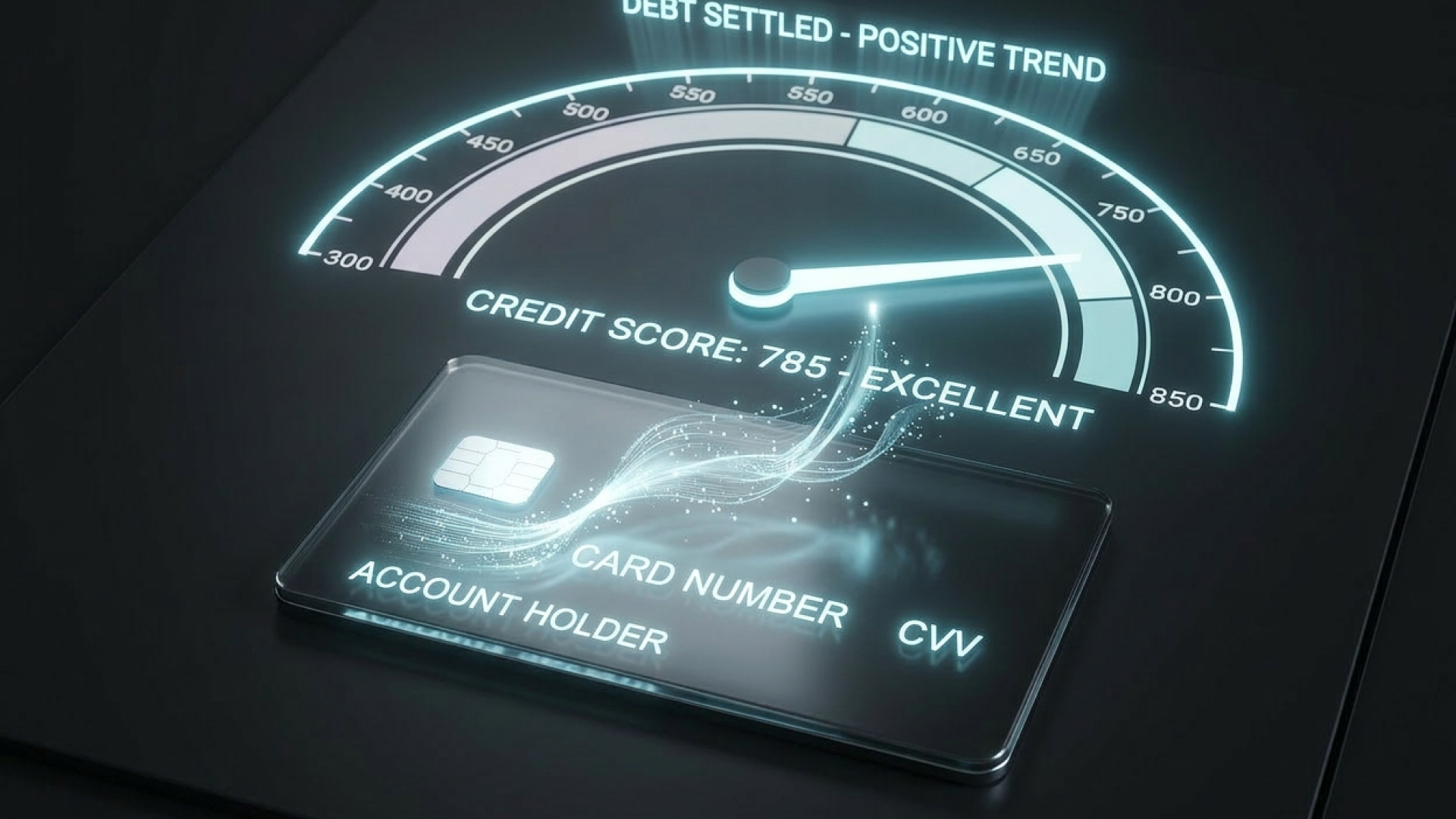
Table of contents8 sections
Credit card debt can become stressful very quickly. What starts as a small unpaid balance can turn into a major financial burden due to high interest charges, late fees, and penalties. In India, many credit cards effectively charge 40% to 50% annualised interest on unpaid balances. This means if you keep paying only the minimum due, the outstanding amount can keep growing month after month.
When borrowers feel trapped, they often start looking for a quick way out. One of the most common options they hear about is credit card settlement. But before choosing this route, it’s important to understand one key question: how does credit card settlement affect credit score?
The short answer is yes: credit card settlement can negatively affect your credit score, especially if the lender reports the account as “Settled” rather than “Closed” or “Paid in Full.” In this guide, we’ll explain what credit card settlement means, how it affects your CIBIL score, the difference between closed vs settled, and how you can rebuild your credit afterwards.
What is a Credit Card Settlement?

A credit card settlement happens when you negotiate with the bank or lender to close your outstanding credit card debt by paying less than the total amount owed.
This usually happens when:
1. You have missed multiple payments
2. Your credit card bill has become too large to manage
3. Late fees and interest charges have made repayment difficult
4. The lender believes you may not be able to repay the full amount
In such cases, the lender may agree to accept a reduced lump-sum payment as a full and final settlement of the credit card account.
Example of Credit Card Settlement
If your outstanding credit card bill is ₹1,00,000, the lender may agree to settle it for ₹60,000 or ₹70,000, depending on your situation.
Once you pay the agreed amount, the lender closes the collection process. However, there is one important catch: the account may be reported as “Settled”, and that can affect your future borrowing ability.
Why Credit Card Settlement Happens

Many people do not realise how quickly credit card debt grows. If you miss your credit card dues, the real cost is not just the late fee. Most cards effectively charge 40% to 50% annual interest on outstanding balances. That means every month you may be paying:
1. Minimum due
2. Late payment charges
3. GST on charges
4. High revolving interest on the remaining balance
Over time, the outstanding amount continues to compound, making it harder to escape the debt cycle. That is why some borrowers consider settlement. It may feel like immediate relief, but it also comes with long-term consequences—especially for your credit score.
How Does Credit Card Settlement Affect Credit Score?
If you want to understand how credit card settlement affect credit score, the most important thing to know is this: when your lender marks your account as “Settled”, it tells credit bureaus that you did not repay the full dues.
Does Credit Card Settlement Affect Your Credit Score?
Yes, it usually does.
When your lender marks your account as “Settled”, it tells credit bureaus that:
1. You did not repay the full dues
2. The lender accepted a reduced amount
3. The account was resolved under financial distress
As a result, a settled account is generally considered a negative credit event.
How It Impacts Your CIBIL Score
A credit card settlement can:
1. Reduce your CIBIL score
2. Lower your overall creditworthiness
3. Make lenders see you as a higher-risk borrower
4. Affect approval for future loans and credit cards
This can impact your chances of getting:
1. Personal loans
2. Home loans
3. Car loans
4. Credit cards
5. Business loans
Why Lenders Care
Banks prefer borrowers who have a track record of repaying debt in full and on time. A settlement suggests that the borrower was unable to meet the original repayment obligation.
Even if your score does not drop by a fixed number immediately, the “Settled” remark can remain visible in your credit report and may affect future applications for years if not corrected or improved over time.
Common Long-Term Effects of Credit Card Settlement

After a credit card settlement, you may face:
1. Lower chances of loan approval
2. Higher interest rates on future borrowing
3. Reduced credit card eligibility
4. Lower credit limits
5. Extra scrutiny during underwriting
While settlement may reduce short-term pressure, it can cause long-term credit damage if not handled properly.
Difference Between “Closed” vs. “Settled”
This is one of the most important things borrowers need to understand. To fully understand how credit card settlements affect credit score, you also need to know the difference between a “Closed” account and a “Settled” account.
What Does “Closed” Mean?
When a credit card account is marked as Closed, it usually means:
1. You repaid the entire outstanding amount
2. There is no pending balance
3. The lender closed the account normally
4. Your credit history reflects proper closure
This is generally seen as neutral or positive for your credit profile.
What Does “Settled” Mean?
When a credit card account is marked as Settled, it means:
1. You did not repay the full outstanding amount
2. The lender accepted a partial payment
3. The account was resolved through negotiation
4. The lender recorded a loss on the account
This is considered negative by most lenders.
Closed vs. Settled: Quick Comparison

A “Closed” credit card account means the full outstanding dues have been paid, and this is usually seen as neutral or positive in your credit report. It reflects responsible repayment behaviour and generally gives you better chances of getting future loans or credit cards.
On the other hand, a “Settled” account means only part of the dues was paid after negotiation with the lender. This can negatively affect your credit score because lenders may see it as a sign that the full repayment was not made. As a result, a settled status can reduce your chances of loan approval or lead to stricter borrowing terms in the future.
Why This Matters
Many borrowers believe that once the account is inactive, the issue is resolved. But lenders do not just see whether the card is active or inactive; they also see how it was closed. That’s why a “Settled” account is very different from a “Closed” account.
How to Rebuild Your Credit After Settlement
If you’ve already settled a credit card, your credit score can still improve over time with the right approach.
Steps to Rebuild Your Credit
Here are some important steps to rebuild your credit after a settlement:
1. Check your credit report and make sure the settled account is updated correctly
2. Fix any errors or duplicate entries by raising a dispute with the lender or credit bureau
3. Try to convert “Settled” to “Closed” by paying the remaining balance, if the lender allows it
4. Pay all EMIs and bills on time to rebuild a strong repayment history
5. Keep credit utilisation low, ideally below 30% of your available credit limit
6. Avoid multiple loan or credit card applications to prevent unnecessary hard inquiries
7. Monitor your credit report regularly to track score improvement and spot issues early
Use a Structured Repayment Strategy
A structured repayment strategy can also make a big difference. Instead of staying stuck in high-interest revolving credit card debt, moving to a lower-interest fixed EMI model—such as Zavo’s structured repayment approach—can help reduce financial stress, improve repayment discipline, and support long-term credit recovery.
This Is How Zavo works.
If you miss your credit card dues, the real cost is often much higher than just the late fee. Most credit cards in India can effectively charge 40% to 50% annual interest on unpaid balances, which means that even if you keep paying only the minimum due, your outstanding amount can continue to grow because of interest, penalties, and compounding charges. Over time, this can make repayment much harder and keep you stuck in a cycle of revolving debt.
Zavo offers a more structured repayment alternative, helping borrowers move away from high-interest credit card debt and into a more manageable plan. Here’s how it works:
1. Take a personal loan at around 10% interest
2. Use it to clear your high-interest credit card dues in one go
3. Convert the outstanding amount into fixed monthly EMIs
4. Follow a clear repayment schedule
5. Reduce the risk of repeated penalties and compounding charges
Why this approach can be better
This method can offer several advantages:
1. Reduces the total cost of debt over time
2. Breaks the cycle of high credit card interest
3. Helps avoid repeated late fees and penalties
4. Makes repayment more predictable and disciplined
5. Reduces financial stress
6. Supports better long-term credit management
When Should You Consider Credit Card Settlement?
Credit card settlement should usually be considered only as a last resort when full repayment is no longer possible.
Situations Where Settlement May Make Sense
You may consider a settlement if:
1. You are in genuine financial hardship
2. You cannot afford full repayment
3. Your account is seriously overdue
4. The lender has started collection pressure
5. You want to avoid a prolonged default
Better Alternatives to Credit Card Settlement
If you can still repay through the following options, they are usually better because they may protect your credit score more effectively:
1. Structured EMI plan
2. Lower-interest personal loan
4. Credit restructuring
Conclusion
If you’re still wondering how credit card settlement affects credit score, the answer is simple: it can negatively affect your credit profile because the account is usually marked as “Settled” instead of “Closed.” This remark is viewed negatively by lenders and can affect future loan approvals, credit card applications, and the terms you receive for borrowing.
However, if you are already under serious financial stress, a settlement may still be better than allowing the debt to continue to fall deeper into default and accumulate more penalties. The smarter goal is not just to solve the problem for today, but to choose a repayment path that reduces your total interest burden, avoids repeated late fees, and helps protect or rebuild your credit over time. Instead of staying trapped in high-interest revolving debt, a structured repayment approach—like Zavo’s lower-interest repayment model—can offer better long-term financial control.
Frequently Asked Questions
1. Does credit card settlement affect your credit score?
Yes, credit card settlement can negatively affect your credit score. When the lender marks your account as “Settled” instead of “Closed” or “Paid in Full,” it signals that the full dues were not repaid, which can reduce your creditworthiness.
2. Is “Settled” bad in a CIBIL report?
Yes, a “Settled” remark is generally viewed negatively in a CIBIL report. It shows that the lender accepted only part of the outstanding amount, which may affect future loan approvals, credit card eligibility, and borrowing terms.
3. What is the difference between “Closed” and “Settled” in a credit card account?
A “Closed” account means you repaid the full outstanding amount, and the card was closed normally. A “Settled” account means the lender accepted a partial payment to close the account. Closed is usually neutral or positive, while settled is generally negative for your credit profile.
4. Can I improve my credit score after a credit card settlement?
Yes, you can rebuild your credit score after settlement by paying all EMIs and bills on time, keeping credit utilisation low, checking your credit report for errors, and avoiding multiple loan applications. In some cases, you may also request the lender to update the status from “Settled” to “Closed” after clearing the remaining balance.
5. Is a credit card settlement better than default?
In many cases, yes. If you are under serious financial stress and cannot repay the full dues, settlement may be better than allowing the account to continue in default. However, if you can still manage repayment through a structured EMI plan, lower-interest personal loan, or debt consolidation, those options may be better for protecting your credit score.