
16 March 2026 · Mayank Dabral
5 Steps to Improve Your Credit Score After the Credit Card Settlement Process
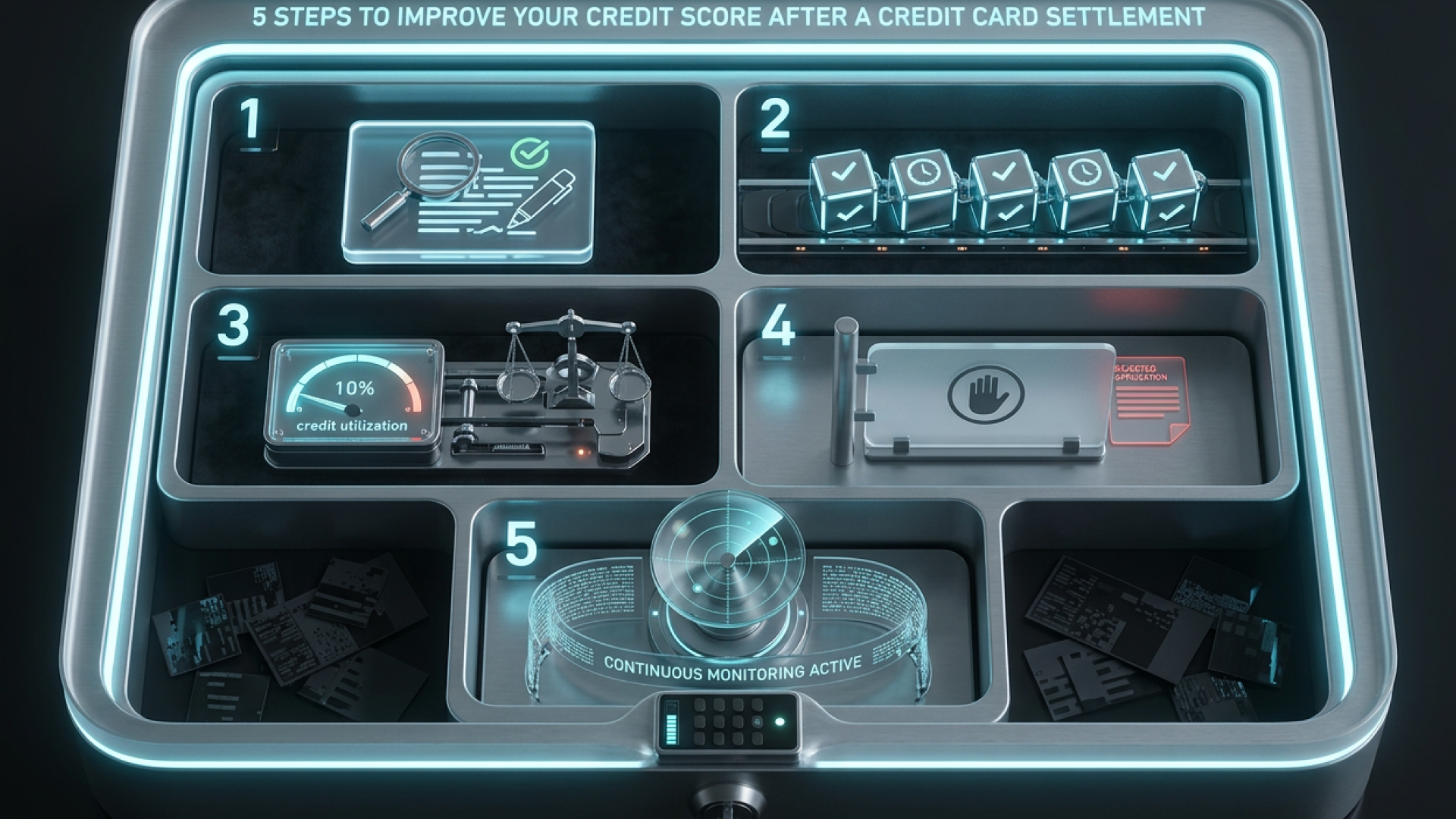
Table of contents7 sections
If you’re struggling with credit card debt, understanding the credit card settlement process is critical. Missing payments isn’t just about paying late fees; most credit cards in India charge extremely high interest often between 40% and 50% annually on unpaid balances. That means each month you pay only the minimum due, your debt continues to grow due to compounding interest and penalties. Over time, what may have started as a small unpaid balance can balloon into an unmanageable financial burden.
Fortunately, you don’t have to face this alone. Structured solutions like Zavo help you settle your credit card dues in a smart, disciplined way, reduce stress, and gradually rebuild your credit score. Let’s dive into exactly how this works and what steps you can take.
Understanding the Credit Card Settlement Process

The credit card settlement process is essentially an agreement between you and your credit card issuer to pay a portion of your outstanding debt as a full settlement. This can save you significant money and prevent further escalation of debt. It’s important to note, however, that settlements may impact your credit score initially, though the effect can be reversed with disciplined repayment.
Settling your credit card debt is preferable to defaulting. Defaulting occurs when you completely stop paying your dues, which can lead to legal action, compounding interest at high rates, and a long-term negative mark on your credit history. Settlements, on the other hand, allow you to negotiate reduced repayment, stop the accumulation of further interest and fees, and regain control over your financial situation.
Under RBI regulations, banks are required to provide a clear settlement offer in writing, including the amount, repayment terms, and how it will impact your credit report. This ensures that borrowers are protected and can make informed decisions.
By settling your debt responsibly, you demonstrate financial discipline. While there may be a short-term dip in your credit score, your long-term creditworthiness can improve if you follow a structured repayment plan.
Step-by-Step Guide to Improve Your Credit Score After a Settlement
Step 1: Assess Your Current Credit Situation
The first step to managing your debt effectively is to understand your current credit situation. Check your credit score through RBI-approved platforms such as CIBIL, Experian, or Equifax. Make a detailed list of all your outstanding debts, including interest, late fees, and penalties.
Knowing exactly how much you owe, how high the interest rates are, and what penalties have accumulated allows you to plan a strategy for settlement. You’ll also be able to estimate how much money you could save by using structured repayment options like Zavo.
Step 2: Choose a Smart Settlement Option with Zavo
One of the biggest mistakes people make is letting their credit card debt spiral out of control. Continuing to pay minimum dues on high-interest cards is expensive and stressful. Zavo offers a structured credit card settlement solution that helps you take control:
- You can take a personal loan at around 10% interest, much lower than typical credit card rates of 40–50%.
- Pay off your high-interest credit card balance in one go.
- Repay Zavo in fixed EMIs according to a clear repayment schedule.
Real Financial Example :
Imagine you have an outstanding balance of ₹1,00,000 on a credit card charging 45% interest annually. Paying only the minimum due results in monthly interest of approximately ₹3,750, plus penalties, compounding over time. If you instead take a Zavo personal loan at 10% interest, your monthly interest would be just around ₹833. Over 12 months, this could save you roughly ₹35,000, while also providing a predictable repayment schedule.
This structured approach does more than save money—it reduces financial stress, prevents further penalty accumulation, and ensures your credit report reflects responsible repayment behavior.
Step 3: Make Timely Payments Post-Settlement
Settling your credit card debt is only the beginning. The next step is making timely payments consistently. Whether you’re paying Zavo EMIs or any other structured repayment plan, punctual payments are crucial for rebuilding your credit score.
Missing payments after a settlement can undo all the positive effects, leading to late fees, renewed penalties, and negative marks on your credit report. Setting up automated EMIs or calendar reminders can help ensure that your repayments are never missed.
Step 4: Monitor Your Credit Reports Regularly
After settling your debt, regularly monitoring your credit reports is essential. This helps you ensure that your settlement is accurately recorded and that subsequent payments are correctly reflected. Errors in reporting can happen, and early detection allows you to dispute and correct mistakes before they harm your credit score.
Use free tools or RBI approved platforms to check your credit score at least once a month. This practice not only tracks your improvement but also keeps you informed and motivated to maintain financial discipline.
Step 5: Maintain Healthy Credit Habits
Rebuilding your credit score is not only about settling debts it also involves long-term financial discipline. Here are some strategies:
- Keep credit utilization below 30% of your available credit limit.
- Avoid opening multiple credit accounts in a short period.
- Diversify your credit responsibly by having a mix of secured loans, low-interest cards, or personal loans.
- Pay all bills on time, not just credit cards, to maintain a positive payment history.
Over time, these habits signal to lenders that you are a responsible borrower, which will improve your creditworthiness and open doors for better financial products.
Real World Scenario
Raj, a 35 year-old software professional, had ₹1,50,000 in credit card debt with an interest rate of 48% per year. Ignoring his dues could have increased his liability to ₹2,20,000 within a year due to compounding interest and late fees. Using Zavo, he took a personal loan at 10% interest, cleared his credit cards in one go, and repaid Zavo in 12 manageable EMIs.
The structured repayment allowed Raj to reduce monthly payments by ₹4,000, avoid penalties, and maintain financial stability. Within nine months, his disciplined repayments improved his credit score by 85 points. This not only helped him access future loans more easily but also gave him peace of mind and a clear path to becoming debt-free.
Why Settling is Better Than Defaulting

It’s important to understand that defaulting may seem like an option if you cannot pay your credit card dues, but it comes with serious consequences. Defaults remain on your credit report for up to seven years, making it difficult to obtain loans or credit cards in the future. Legal action can also be initiated by banks to recover the amount owed, increasing stress and financial uncertainty.
In comparison, a settlement is a proactive, controlled, and legal approach to managing debt. It allows you to negotiate a feasible repayment plan, stop additional interest and penalties, and rebuild your financial reputation over time. Zavo’s structured settlement solution ensures that you repay your dues in a clear, predictable way while avoiding the high costs associated with defaulting.
Conclusion
Managing credit card debt doesn’t have to be overwhelming. By understanding the credit card settlement process and taking proactive steps, you can reduce financial stress, save on interest, and gradually rebuild your credit score. Using structured solutions like Zavo allows you to consolidate high-interest credit card balances into a low-interest personal loan, pay in fixed EMIs, and regain control over your finances.
Remember, settling your debt is always better than defaulting, and maintaining disciplined repayment habits afterward is key to improving your creditworthiness. Start today download the Zavo app, settle your credit card dues smartly, and take the first step toward a healthier financial future.
Ready to reduce your credit card liability and save thousands? Get the Zavo app and take the first step toward financial freedom.
Frequently Asked Question
Q1: Will settling my credit card debt lower my credit score?
Initially, yes. Settling can cause a minor dip in your score. However, if you follow a structured repayment plan and maintain timely payments, your score can recover and even improve over time.
Q2: Is it better to settle or default?
Settling is always better. Defaulting can lead to legal action, higher compounded interest, and long-term damage to your credit score. Settling provides a controlled, predictable repayment path.
Q3: How can Zavo assist in the settlement process?
Zavo consolidates your high-interest credit card debt into a low-interest personal loan with fixed EMIs, reducing financial stress and allowing you to repay your debt systematically.
Q4: Can I negotiate the settlement amount with my bank?
Yes. RBI regulations require banks to provide transparent, documented settlement offers. This gives you the opportunity to negotiate a realistic repayment plan that suits your financial situation.
Q5: How long does it take to rebuild a credit score after settlement?
With timely repayments and disciplined credit usage, most users see improvement within 6–12 months. Maintaining good habits over the long term can restore your score fully and open opportunities for future credit.