
13 January 2025 · Aditi sharma
6 Money Resolutions to Transform Your Finances in 2025
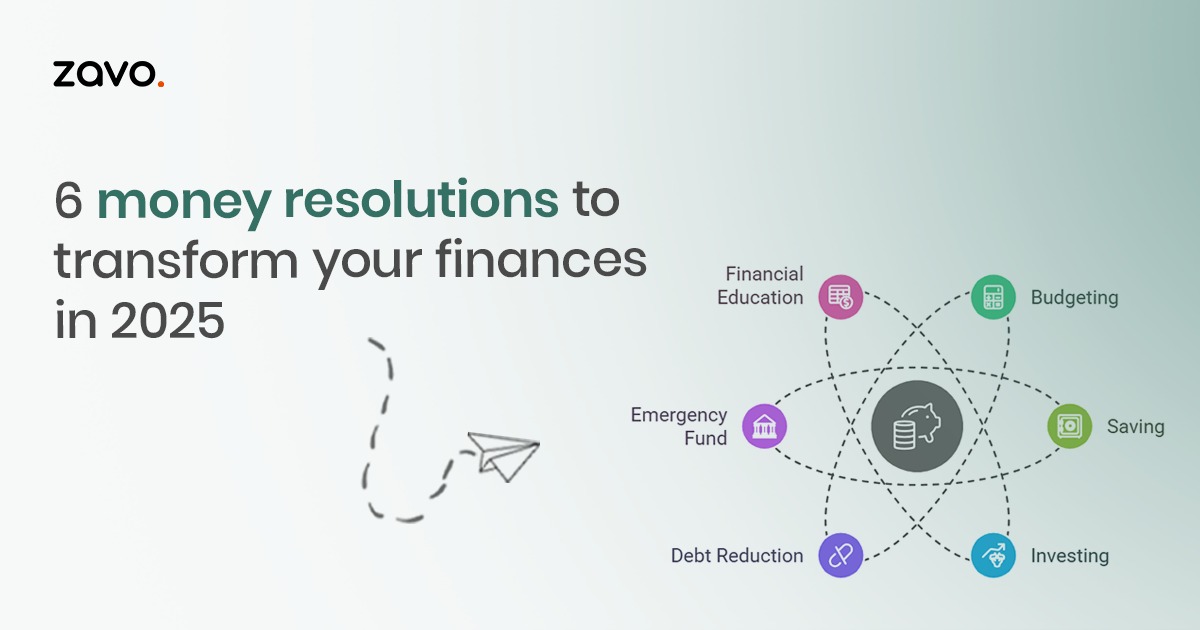
Table of contents8 sections
A goal without a plan is just a wish.” As we step into 2025, let’s turn those financial wishes into achievable goals! Whether you're looking to grow your savings, reduce debt, or simply become more mindful about spending, these six money resolutions are designed to help you take control of your finances and make 2025 your most prosperous year yet. Read on to explore actionable tips, backed by expert advice and real-world data, to set yourself up for financial success.
1. Create and Stick to a Realistic Budget
A budget is the cornerstone of financial health. Studies reveal that individuals who budget are more likely to achieve their financial goals. Start by categorizing your income and expenses. Identify needs versus wants and allocate your resources accordingly. A popular budgeting strategy is the 50/30/20 rule: 50% of your income goes to necessities like housing and groceries, 30% to discretionary spending, and 20% to savings and debt repayment.Leverage budgeting tools, or even simple spreadsheet templates to track your spending. This awareness helps curb impulsive purchases and ensures that every dollar has a purpose. Budgeting isn’t about restricting yourself but about aligning your spending with your values and priorities.
2. Pay Off High-Interest Debt
High-interest debts, like credit card balances, can drain your finances quickly. 47% of cardholders carry a balance month-to-month. Interest rates on these balances can exceed 20%, significantly increasing your repayment amount over time.To tackle debt effectively, consider using the debt snowball or avalanche method. The snowball method involves paying off the smallest debts first for quick wins, while the avalanche method focuses on clearing high-interest debts to save money in the long term. Combine these strategies with extra payments when possible to accelerate debt elimination. By reducing your debt burden, you’ll free up funds for savings and investments—a double win for your financial health.
3. Build an Emergency Fund
Life is unpredictable, and an emergency fund acts as a financial safety net. Whether it’s a sudden medical expense, car repair, or job loss, having savings can prevent you from spiraling into debt during tough times. Experts recommend saving at least 3-6 months’ worth of expenses in an easily accessible account. If that target feels daunting, start small. Setting aside even $20 a week can add up to over $1,000 in a year. Automate your savings to make the process effortless. A 2022 Bankrate survey revealed that only 43% of Americans have enough savings to cover a $1,000 emergency, underscoring the importance of this resolution.
4. Invest in Your Future
Investing is essential for long-term wealth building. If you haven’t started yet, 2025 is the perfect time to dive in. Thanks to platforms like Robinhood, E*TRADE, and Vanguard, beginners can easily access the stock market and other investment opportunities. Diversify your portfolio with a mix of stocks, bonds, mutual funds, and ETFs to mitigate risks. If you’re unsure where to start, consider index funds, which track the overall market and offer consistent returns over time. CNBC notes that individuals who start investing in their 20s are more likely to retire comfortably compared to those who delay. Don’t forget the power of compound interest—the earlier you start, the more your money grows.
5. Prioritize Financial Education
Knowledge is power, especially when it comes to finances. Make it a resolution to enhance your financial literacy this year. Commit to reading one personal finance book every quarter or follow reputable blogs, YouTube channels, and podcasts dedicated to money management. Some must-read books include "The Simple Path to Wealth" by JL Collins and "Rich Dad Poor Dad" by Robert Kiyosaki. Additionally, podcasts like "The Dave Ramsey Show" or "ChooseFI" provide practical advice on budgeting, investing, and financial independence. Did you know that a survey by the National Financial Educators Council found that lack of financial knowledge cost Americans an average of $1,819 in 2022? Prioritize learning to make informed decisions.
6. Plan for Retirement
It’s never too early (or late) to think about retirement. Many Americans regret not saving more for their golden years. Take advantage of employer-sponsored 401(k) plans, especially if they offer matching contributions—that’s free money on the table. For those without access to such plans, an Individual Retirement Account (IRA) is a great alternative. Ensure you’re maximizing contributions and consider consulting a financial advisor to create a tailored retirement strategy. Individuals should aim to save at least 15% of their annual income for retirement. The magic of compound interest can turn even modest contributions into a comfortable nest egg. Learn how to plan effectively for retirement here.
Conclusion
Transforming your finances isn’t about perfection—it’s about progress. By adopting these six resolutions, you’re taking proactive steps toward a more secure and abundant financial future. Remember, consistency is key. Start small, track your progress, and celebrate milestones along the way. Looking for expert guidance to accelerate your financial success in 2025? zavo offers personalized financial planning and solutions tailored to your unique goals. Don’t let financial uncertainty hold you back. Get in touch with zavo today and let us help you build the future you deserve!
FAQs
Q: How can I save money when my income is limited?
Start by tracking your expenses and cutting unnecessary costs like dining out or subscriptions. Focus on needs over wants, set small savings goals, and automate savings. Use budgeting apps to stay organized and consider side gigs to supplement your income.
Q: Is it better to pay off debt or save money?
Prioritize high-interest debt while building a small emergency fund. Use a balanced approach, like the 70/20/10 rule: 70% for living expenses, 20% for debt, and 10% for savings. This ensures financial stability and debt reduction.
Q: What’s the best way to start investing with no experience?
Begin with low-risk options like index funds or SIPs in mutual funds. Educate yourself with books or online courses and use platforms like robo-advisors for guidance. Start small and focus on long-term growth rather than quick returns.
Q: How much should I save for an emergency fund?
Save 3-6 months’ worth of living expenses. Start small, automate savings, and store funds in a high-yield savings account or liquid mutual fund for easy access during emergencies.
Q: How can I improve my credit score?
Pay bills on time, keep credit utilization below 30%, and check your credit report regularly. Avoid applying for too many loans or cards. Use credit monitoring tools like zavo to track and improve your score.