
8 February 2025 · Aditi sharma
Understanding Home Loan Amortization and Repayment Schedules
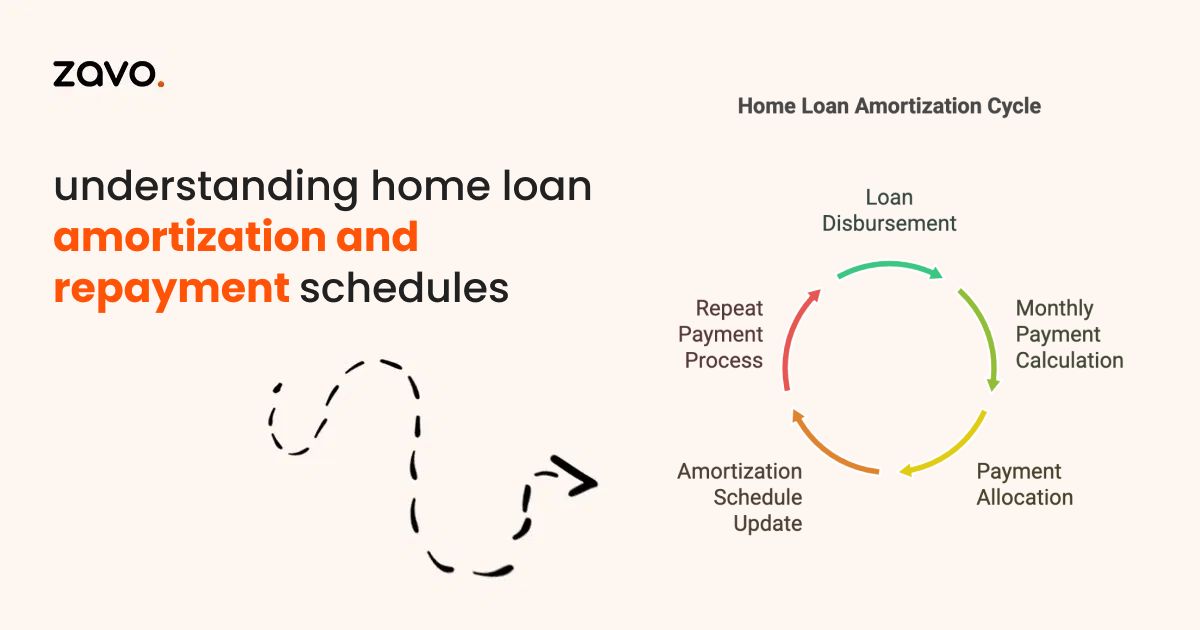
Table of contents8 sections
Buying a home is a dream for many, but repaying a home loan can sometimes feel overwhelming.
Have you ever looked at your EMI breakdown and wondered why most of your early payments go towards interest rather than reducing the actual loan amount? This is where home loan amortization comes into play.
Understanding amortization can help you take control of your finances, plan better, and even save on interest over the long run.
In this blog, we’ll explain how home loan amortization works, how you can use it to your advantage, and how to calculate your loan repayment schedule effectively.
What is Home Loan Amortization?
At its core, amortization is the process of gradually paying off a loan over time through regular monthly payments (EMIs). Each EMI you pay consists of two key components:
✔️ Principal – The actual amount borrowed.
✔️ Interest – The cost charged by the lender for borrowing the loan.
At the beginning of your loan tenure, a major portion of your EMI goes towards interest, while only a small part reduces your principal amount. Over time, as the outstanding loan amount decreases, the interest portion reduces, and a larger part of your EMI goes toward paying off the principal.
This structured repayment plan is called an Amortization Schedule, and it helps ensure that your loan is fully repaid by the end of the tenure.
How Amortization Works: Breaking Down Your EMI
When you take a home loan, your bank provides you with an amortization schedule, which outlines the breakdown of each EMI over the entire loan period. Here’s how it works:

1. Early Years: More Interest, Less Principal
In the initial years of your loan, your EMI mostly covers the interest because the outstanding loan amount is high. You may feel like you're making payments but not reducing your loan significantly.
Example: If your EMI is ₹30,000, in the first few years, nearly ₹25,000 might go toward interest, while only ₹5,000 reduces your loan balance.
2. Later Years: More Principal, Less Interest
As time progresses and your loan balance decreases, the interest amount charged also reduces. This means a larger portion of your EMI starts going toward the principal repayment.
Example: In the later years of the loan, out of the same ₹30,000 EMI, around ₹5,000 might go towards interest, while ₹25,000 pays off the principal.
By the end of the loan term, your last EMI will mostly consist of the final principal amount and a small interest portion.
Understanding the Home Loan Amortization Formula
The standard formula used to calculate home loan EMIs and amortization is:

Where:
- P = Principal Loan Amount
- R = Monthly Interest Rate (Annual Interest Rate ÷ 12)
- N = Loan Tenure in Months
Example Calculation:
Suppose you take a ₹30 lakh home loan at an 8% annual interest rate for 20 years (240 months).
- P = ₹30,00,000
- R = 8% ÷ 12 = 0.0067
- N = 20 × 12 = 240 months
Plugging these values into the formula, your monthly EMI would be approximately ₹25,093.
This EMI remains the same throughout the loan tenure, but the portion allocated to interest and principal changes each month, as per the amortization schedule.

Types of Amortization Methods
1. Fixed-Rate Amortization
- What It Means: Your EMI remains constant throughout the loan tenure because the interest rate is fixed.
- Who Should Choose It: Borrowers who prefer stability in their monthly payments and don’t want to worry about market fluctuations.
- Advantage: Makes budgeting easier, as the EMI remains the same.
2. Adjustable-Rate Amortization (Floating Rate Loans)
- What It Means: The interest rate fluctuates based on market conditions, impacting your EMI amount.
- Who Should Choose It: Borrowers who expect interest rates to decline in the future.
- Advantage: If interest rates drop, you pay lower EMIs.
Why Understanding Amortization is Important?
1. Helps You Plan Your Finances Effectively
By knowing how much of your EMI goes towards interest and how much towards principal, you can plan your budget better and allocate money for other investments.
2. Lets You Optimize Loan Prepayments
If you receive a bonus or extra savings, you might want to make an extra payment toward your principal. Since interest is highest in the early years, making a lump sum payment reduces your total interest burden significantly.
Example: If you make a ₹2 lakh prepayment in the first five years, you could save ₹5-6 lakh in interest and shorten your loan tenure.
3. Helps in Refinancing Decisions
Understanding amortization allows you to compare your current loan’s interest structure with new loan offers. If a bank is offering a lower interest rate, refinancing might save you money in the long run.
Common Misconceptions About Amortization
1. My EMI only pays interest in the first few years.
This is a half truth. While the interest portion is higher in the beginning, every EMI still includes principal repayment, just in smaller amounts.
2. Prepayments don’t make a big difference.
Wrong! Even a small prepayment in the first few years can help you save lakhs in interest over the loan’s lifetime.
3. Adjustable rate loans always save money.
Not necessarily. If interest rates increase, your EMI can go up, leading to higher repayments than a fixed-rate loan.
Final Thoughts
Understanding home loan amortization isn't just about calculations. It’s about making smarter financial choices. Here’s how you can use this knowledge:
✔️ Make extra prepayments early in the loan tenure to save on interest.
✔️ Compare amortization schedules before refinancing to ensure it benefits you.
✔️ Choose between fixed and floating rates based on your long-term financial plans.
✔️ Use online amortization calculators to visualize your repayment strategy.
If you’re taking a home loan or already have one, being aware of how your EMIs are distributed will help you plan your loan repayment efficiently and achieve homeownership sooner.
Looking for expert loan advice? Let zavo help you!
✔️ Instant Loan Eligibility Check
✔️ Lowest Interest Rates
✔️ Quick Approval with Minimal Documentation
Frequently Asked Questions (FAQs)
1. What is the difference between principal and interest in a home loan?
The principal is the original amount borrowed, while the interest is the fee charged by the lender for borrowing the money. Your EMI covers both these components.
2. How can I check my home loan amortization schedule?
Most lenders provide an amortization schedule when you take a loan. You can also use an online EMI calculator to generate one.
3. Can I reduce my loan tenure by making prepayments?
Yes! Prepayments directly reduce the principal balance, which in turn lowers the interest burden and shortens the tenure.
4. How does refinancing affect amortization?
Refinancing creates a new amortization schedule with a revised interest rate and tenure, potentially lowering your EMI or loan term.
5. Should I choose a fixed or floating rate loan for better amortization?
If you prefer stability, go for fixed rates. If you expect interest rates to drop, floating rates might help you save money.