
7 February 2025 · Aditi sharma
RBI Cuts Repo Rate to 6.25% for the First Time in 5 Years
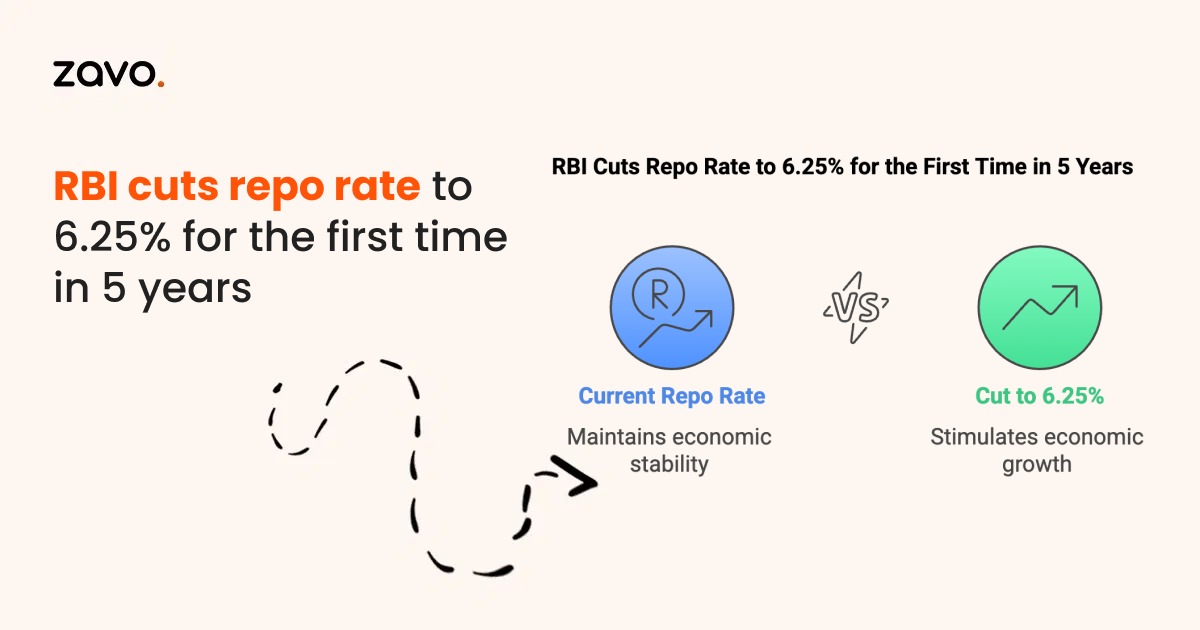
Table of contents4 sections
The much-awaited announcement is here!
The Reserve Bank of India (RBI) has cut the repo rate by 25 basis points (bps), bringing it down to 6.25%—the first reduction since 2019. This move is expected to boost economic growth, encourage borrowing, and make loans cheaper for businesses and individuals.

Key Takeaways:
- Repo Rate Cut – Reduced by 25 bps to 6.25%
- Growth Projection – GDP forecast for FY26 revised up to 6.7%
- Inflation Outlook – Expected to remain stable at 4.2%
- Impact on Borrowers – Lower home, auto, and business loan rates
Why Did RBI Cut the Repo Rate?
The repo rate is the interest rate at which the RBI lends to commercial banks. A cut in the repo rate makes borrowing cheaper for banks, leading to lower interest rates on loans for consumers and businesses.
This move follows the government’s recent personal tax cuts, which aim to increase disposable income and boost spending. With inflation cooling to 5.22% in December 2024, the RBI found room to support economic expansion without overheating the economy.
Governor’s Statement
RBI Governor Sanjay Malhotra announced:
"The Monetary Policy Committee unanimously decided to reduce the policy rate by 25 basis points from 6.5% to 6.25%."
Additionally, the Standing Deposit Facility (SDF) rate has been adjusted to 6.00%, while the Marginal Standing Facility (MSF) rate and Bank Rate now stand at 6.50%.
What This Means for You
Lower Interest Rates on Loans: If you're planning to buy a home, car, or take a business loan, this rate cut could make borrowing cheaper. However, the extent of benefit depends on how banks adjust their lending rates.
Savings & Fixed Deposits Might See Lower Returns: While borrowers benefit from lower interest rates, those relying on fixed deposits (FDs) and savings account interest may see slightly lower returns.
Economic Growth Boost : With cheaper credit access, businesses may expand operations, hire more employees, and increase investments, fueling economic momentum.
What is Repo Rate & How Does It Impact You?
The repo rate is the interest rate at which RBI lends money to banks for short-term liquidity needs. A lower repo rate makes borrowing cheaper, leading to lower home, car, and personal loan interest rates, boosting spending and investment. Conversely, a higher repo rate curbs inflation but slows economic growth.
With the latest 25 bps rate cut to 6.25%, borrowers can expect lower EMIs and easier access to credit, stimulating economic activity. However, fixed deposit returns may decline, affecting those reliant on interest income. This move reflects RBI’s focus on economic growth while keeping inflation in check amid global uncertainties.
Final Thoughts
This first repo rate cut in five years signals a pro-growth approach by the RBI, aligning with the government’s fiscal measures. Analysts will closely track how banks respond and its impact on inflation, investments, and economic revival.
For borrowers, it’s a great time to lock in lower interest rates. For savers, it’s time to explore alternative investment avenues.
Frequently Asked Questions (FAQs)
1. How much did the RBI cut the repo rate by?
The RBI reduced the repo rate by 25 basis points (bps), bringing it down to 6.25%.
2. How will the rate cut affect home loan EMIs?
If banks pass on the rate cut, home loan interest rates may decrease, leading to lower EMIs for borrowers with floating-rate loans.
3. Will fixed deposit interest rates decrease?
Yes, banks may reduce FD rates, affecting those who rely on interest income.
4. Is this a good time to take a business loan?
Yes! Lower repo rates mean cheaper loans, making it a great time for business expansion.
5. Will RBI cut the repo rate further?
It depends on inflation trends and economic conditions. If inflation remains low, more rate cuts could happen in the future.